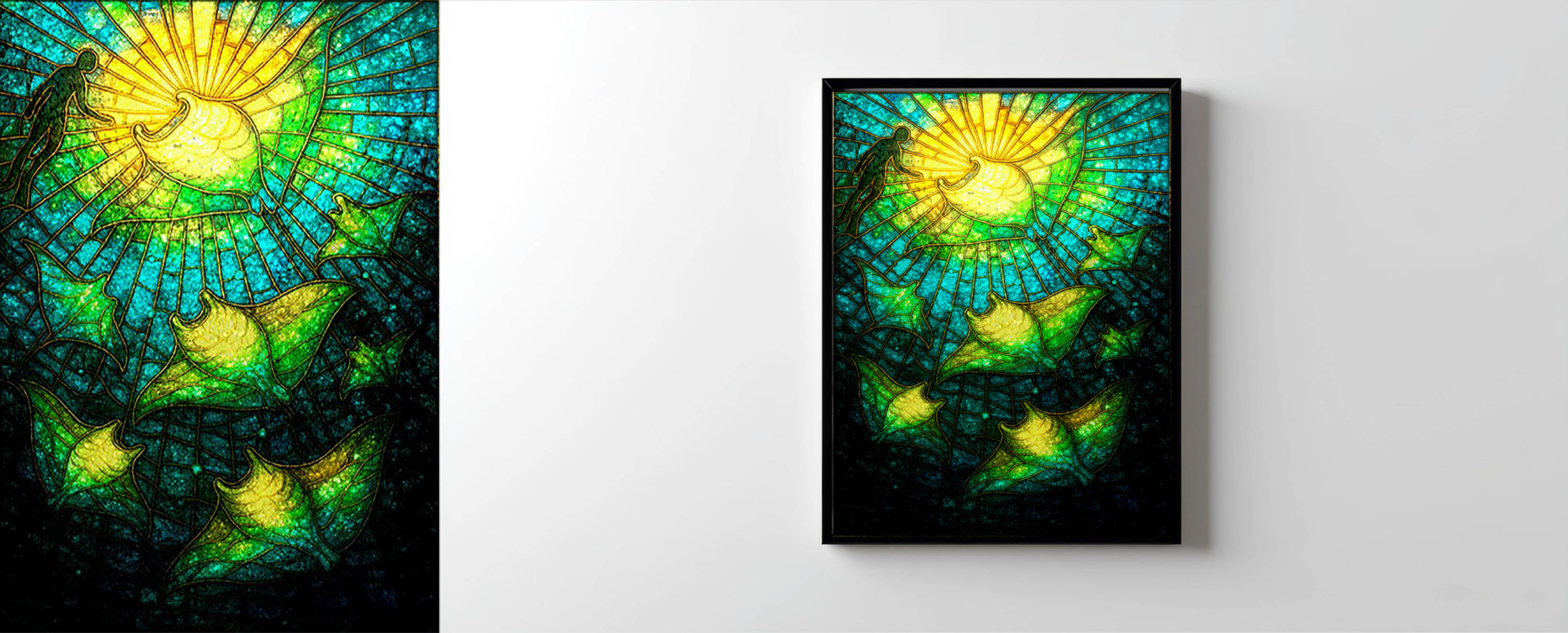
This project challenged us to create a digital illustration in the style of a well-known artist. The result must be the outcome of a rigorous co-creative workflow between human design and a generative AI tool.
The core focus is intentional iterative development: my original hand-drawn sketch served as the conceptual and compositional “seed” from which all digital explorations originated. I used AI not as a shortcut, but as a responsive collaborator. It reinterpreted my content, structure, and stylistic directions while I was continually refining prompts and constraints.
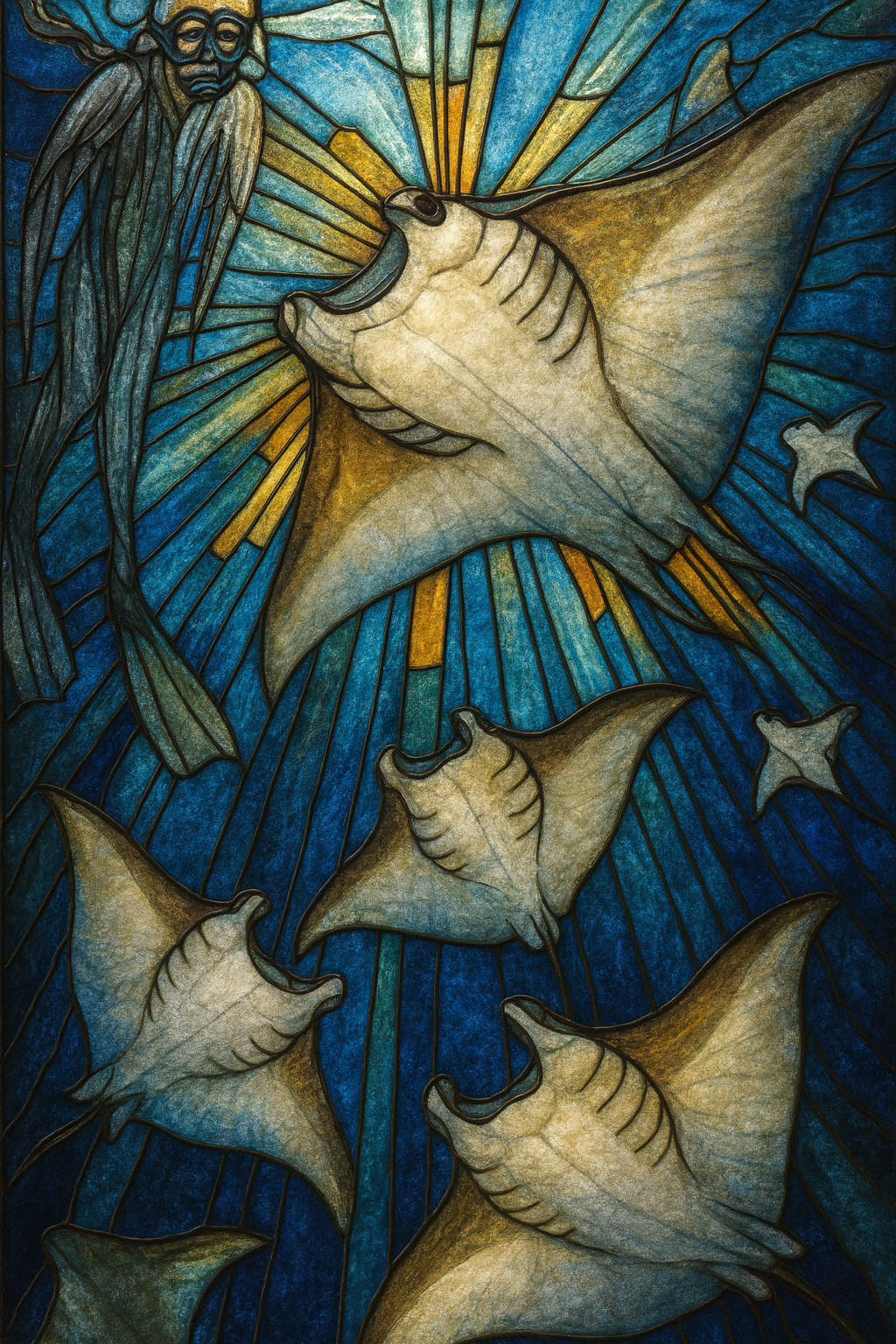
I chose to do a stain glass inspired piece done in the style of Louis Comfort Tiffany, a famous artist mostly known for his glass lamps from the art nouveau era. The way light shines through water reminds me of the way its reflected in stain glass, so I thought this would be the perfect medium to try to recreate with generative AI and many prompts.
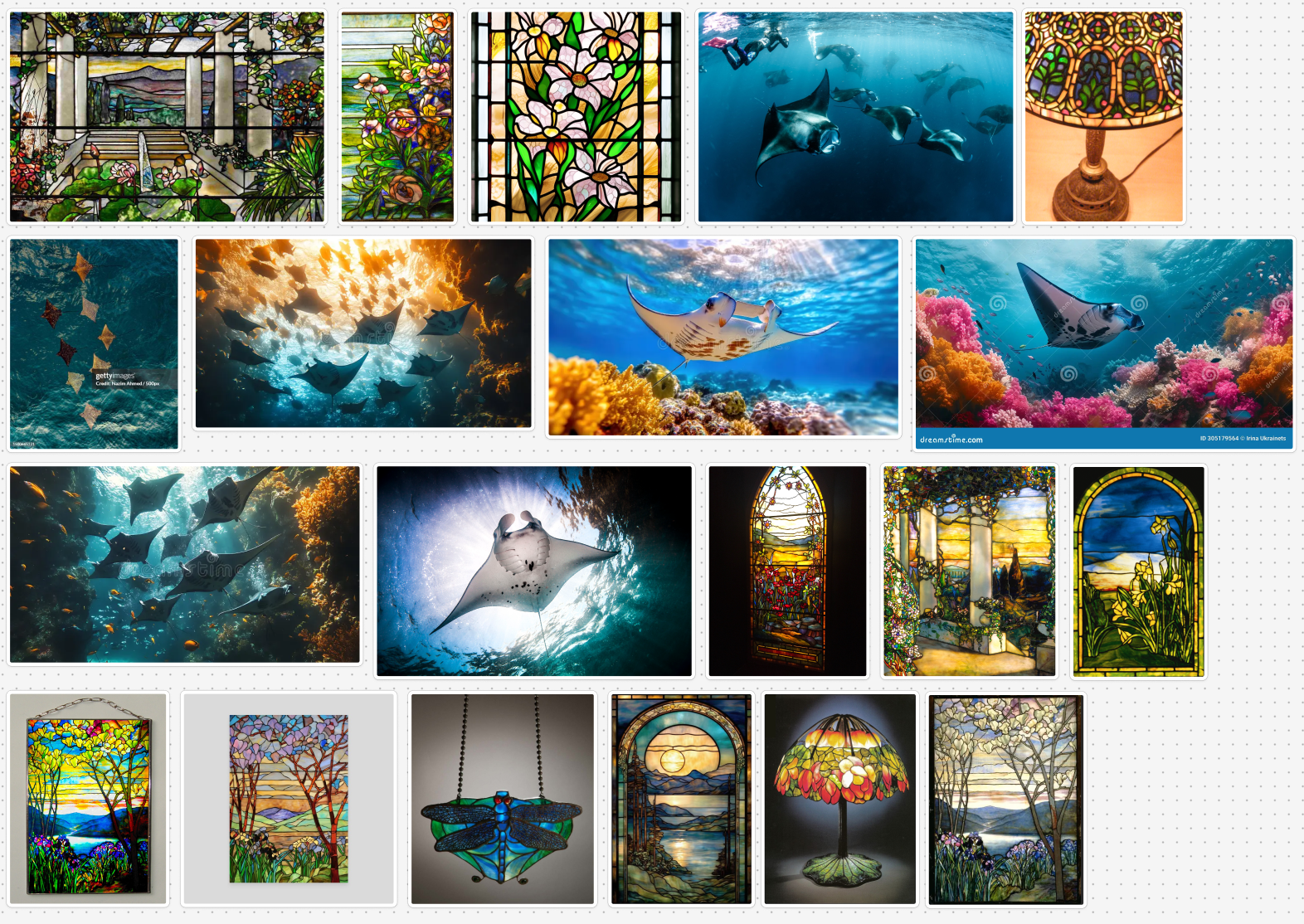
There is alot I noticed about Louis Comfort Tiffany’s style. His pieces are detailed with vibrant colors. They show depth, warm, and a sense of calmness when looking at it. He creates pieces with glass that feel ombre and hand painted in a way, which I really feel like that makes his style unique. The little streaks and cloudy parts actually make it prettier and more interesting.
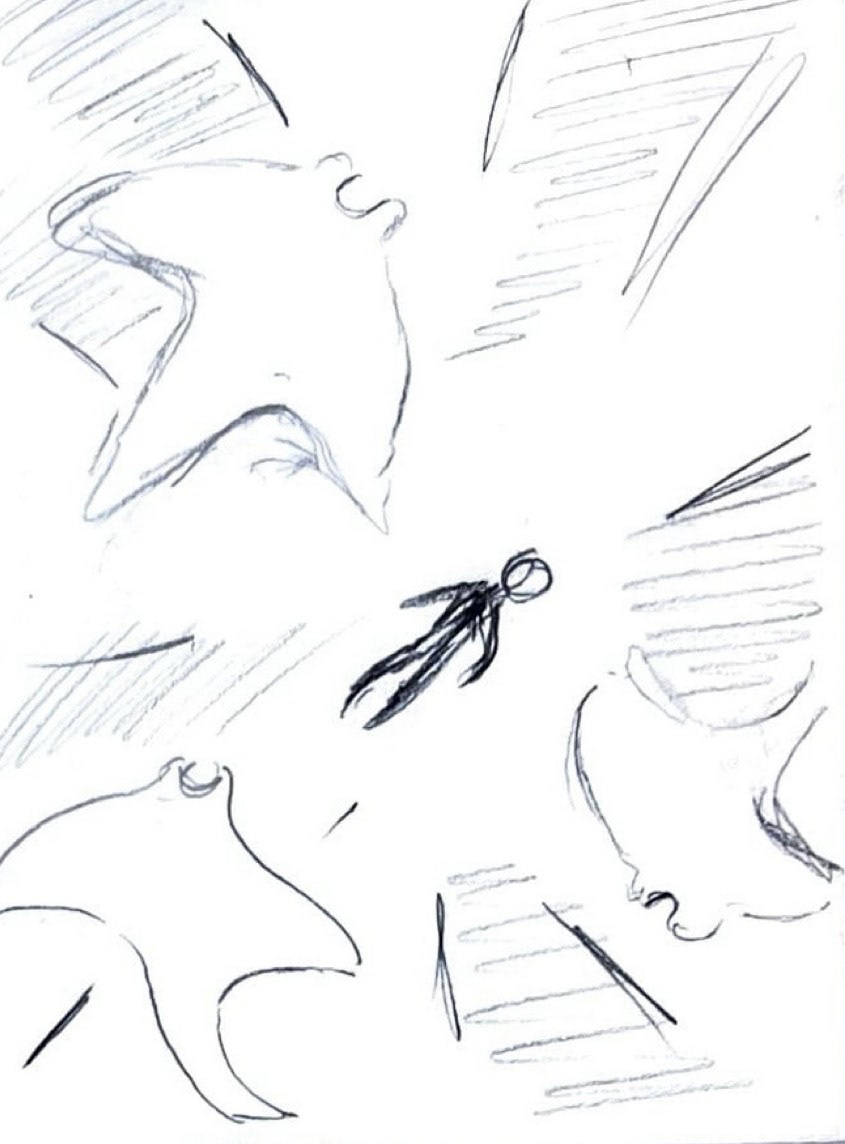
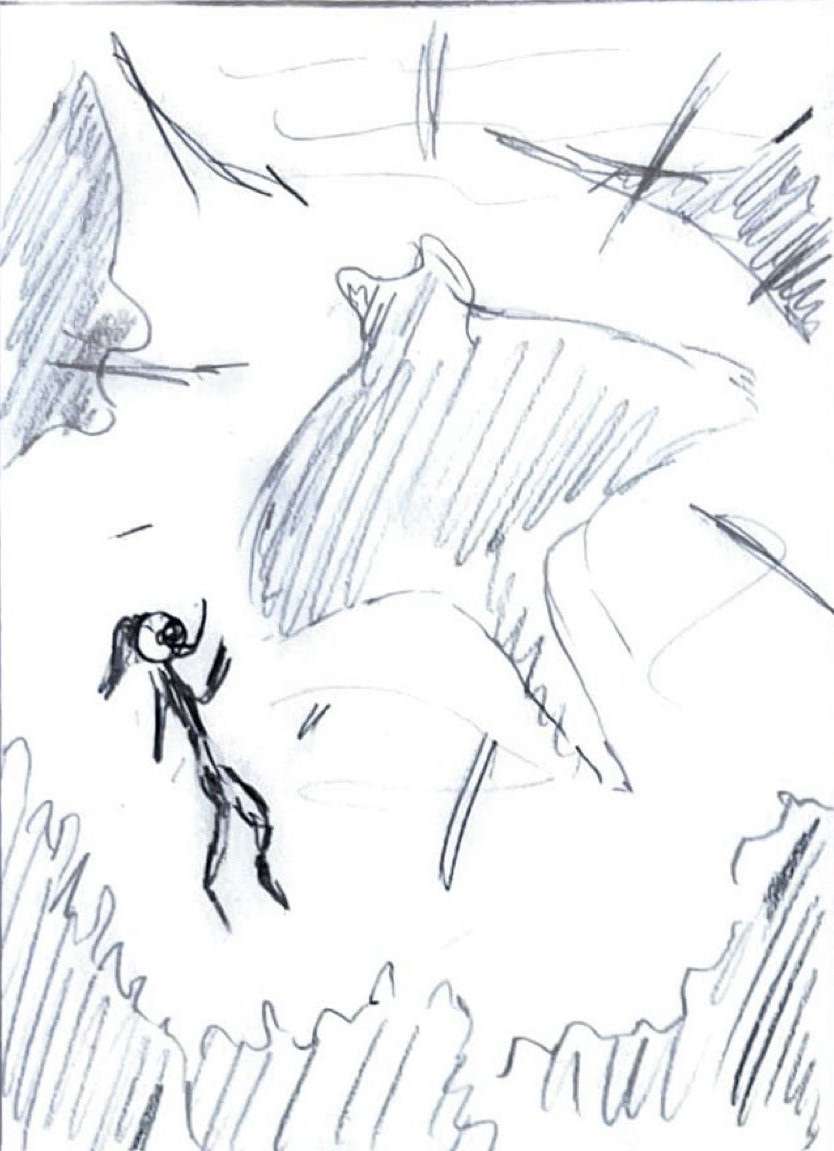
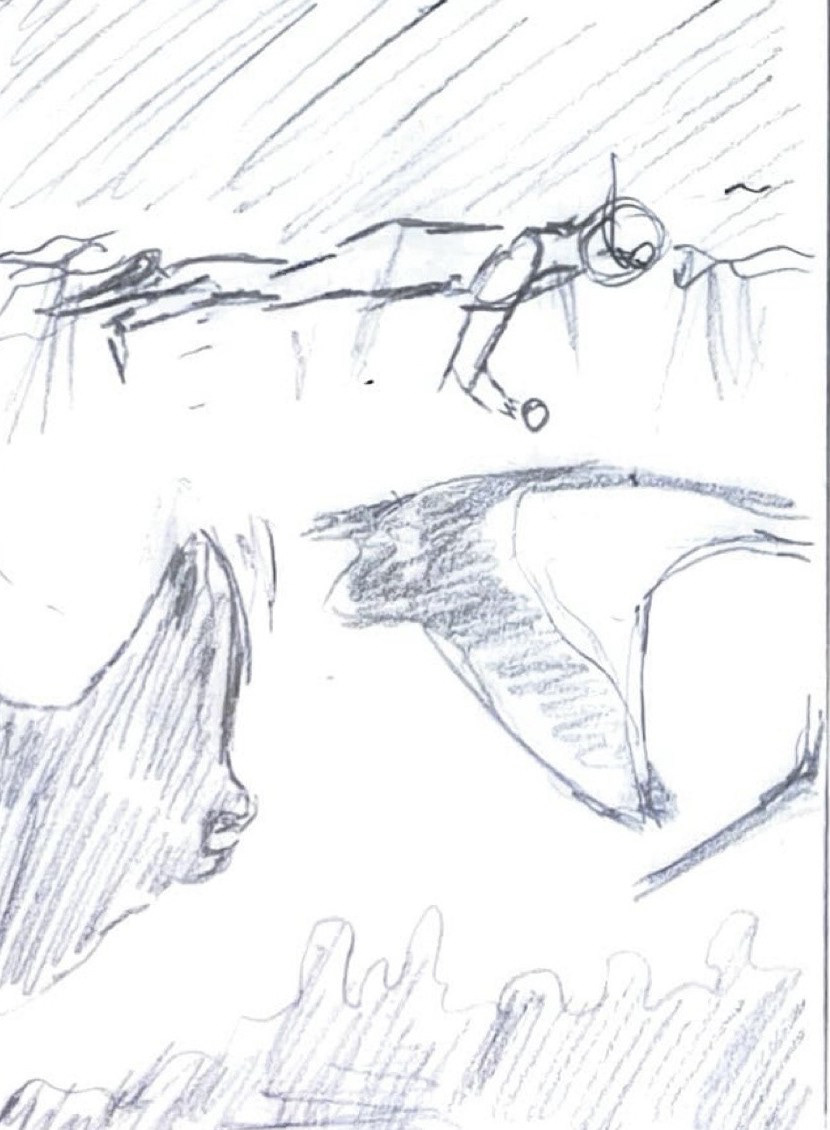
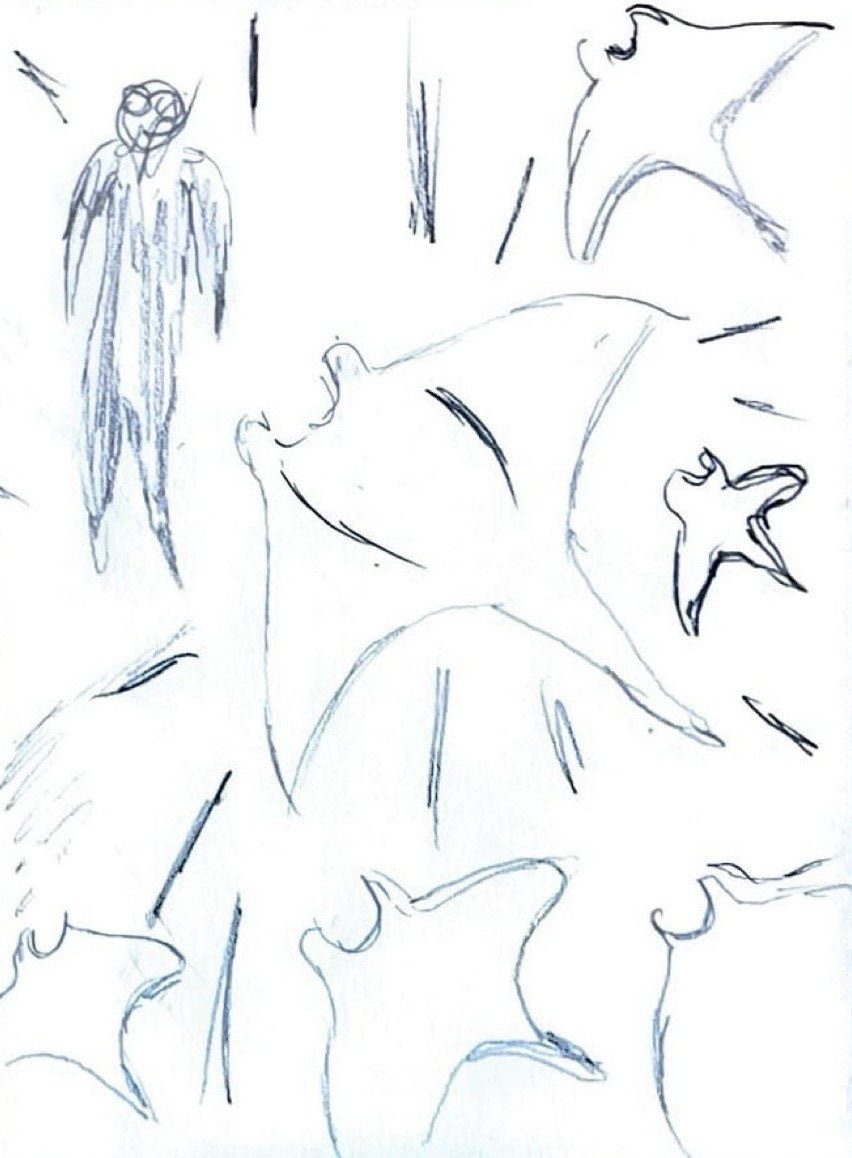
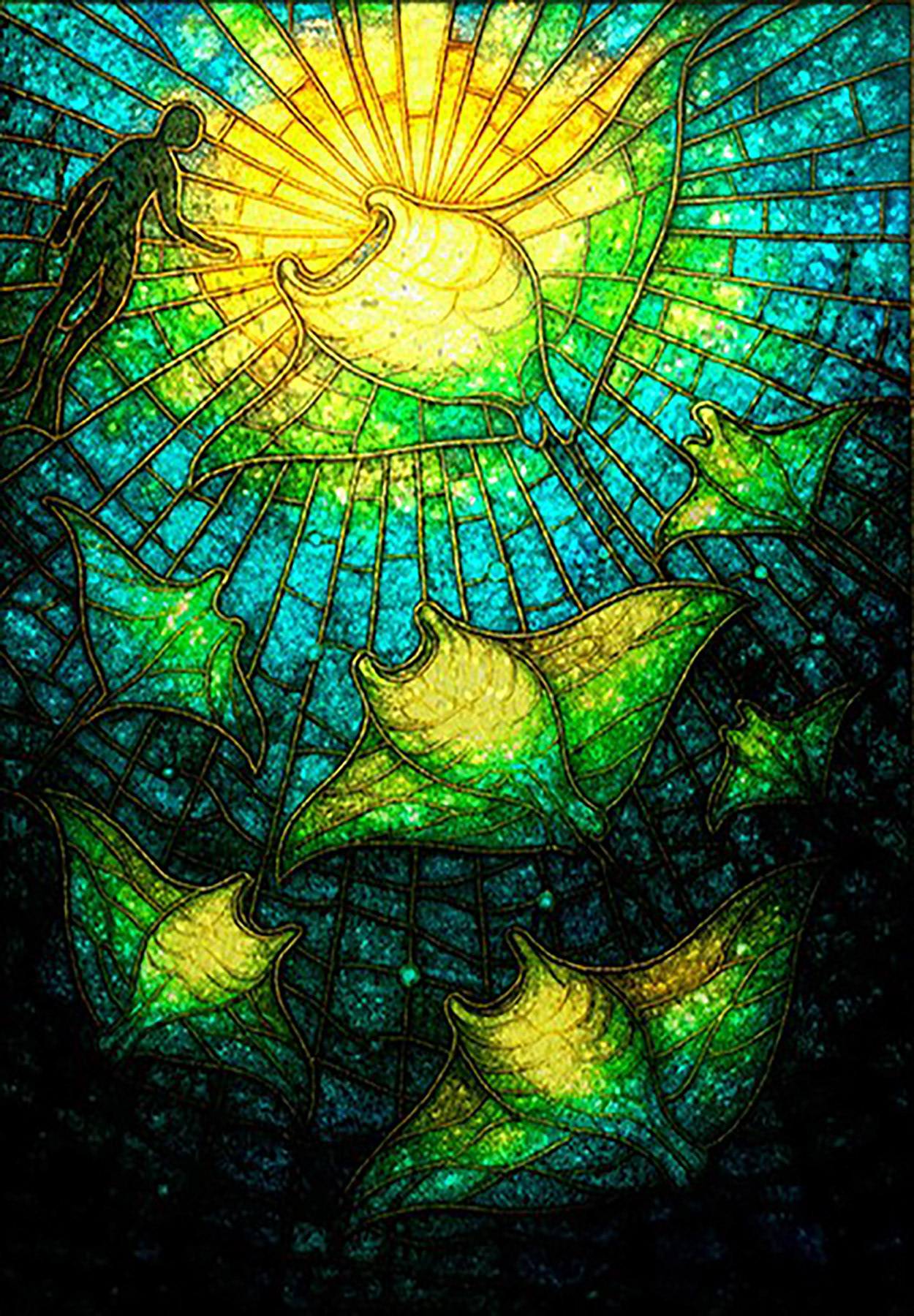
I wanted to show a variety of different angles of a school of manta ray. Each sketch shows a different perspective ranging from a bird's eye view to what it would look like from the sand looking up at the bellies of the manta ray while the snorkeler is looking down. Some sketches even include framing the composition in a coral reef.
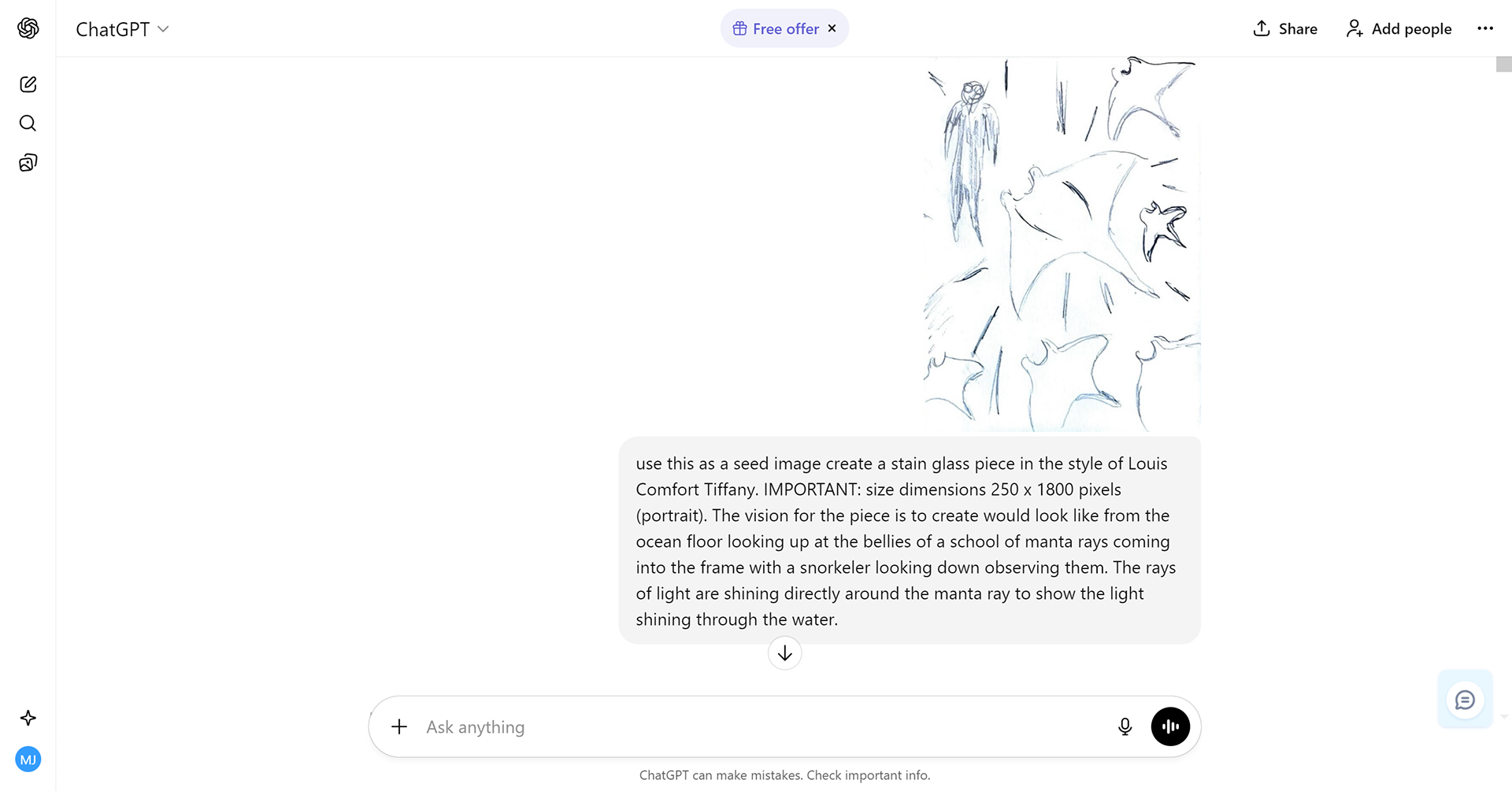
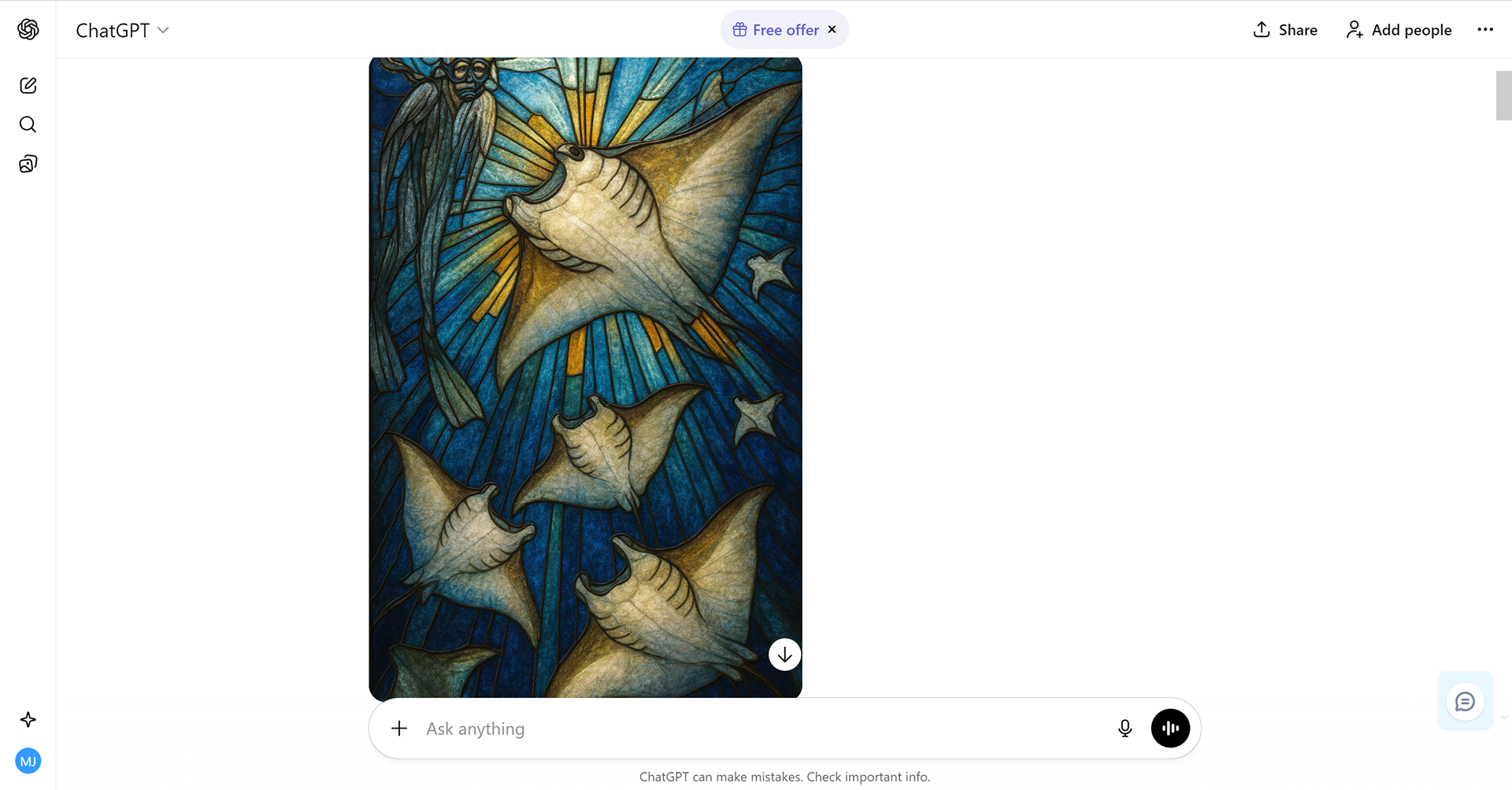
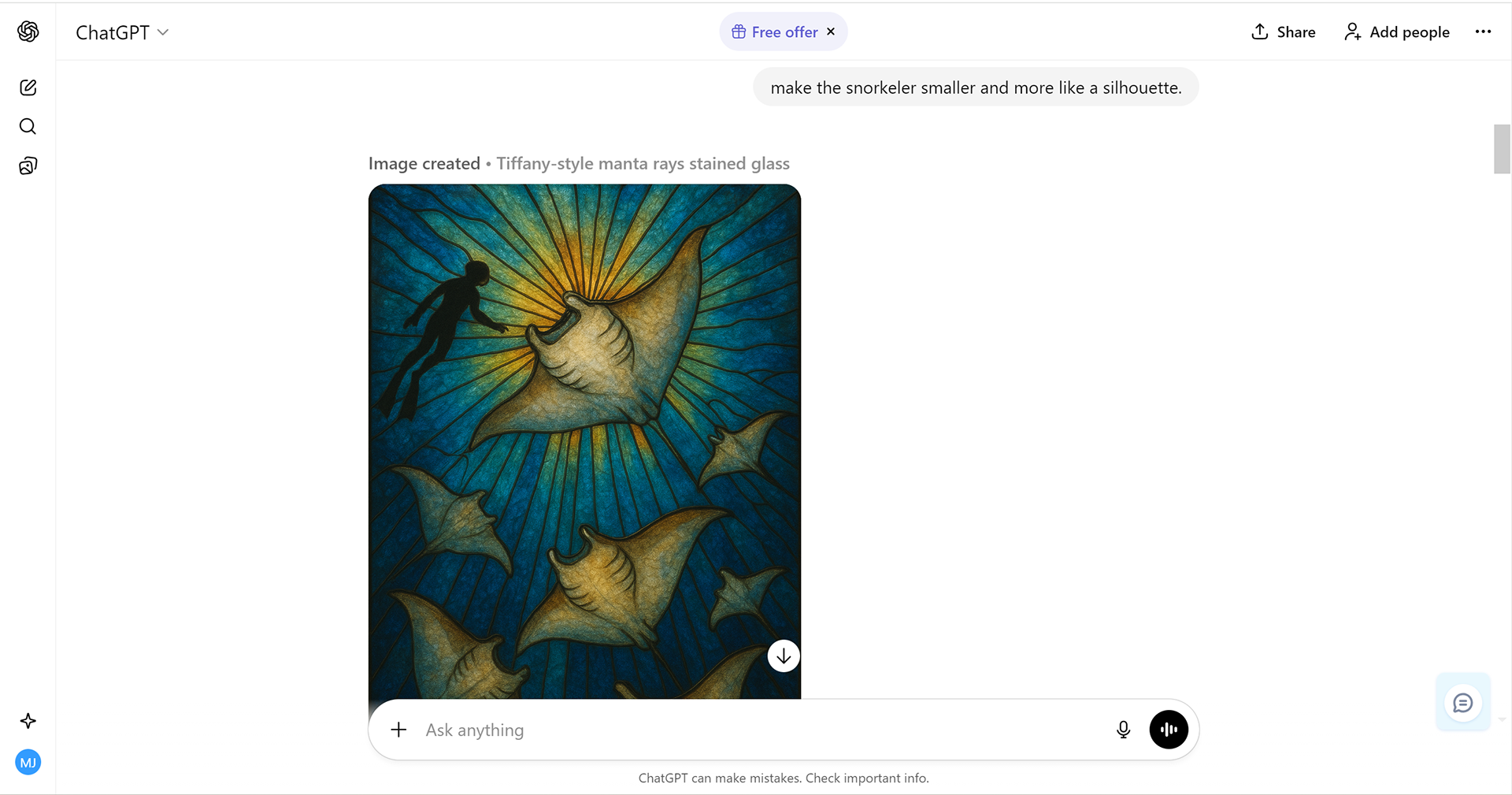
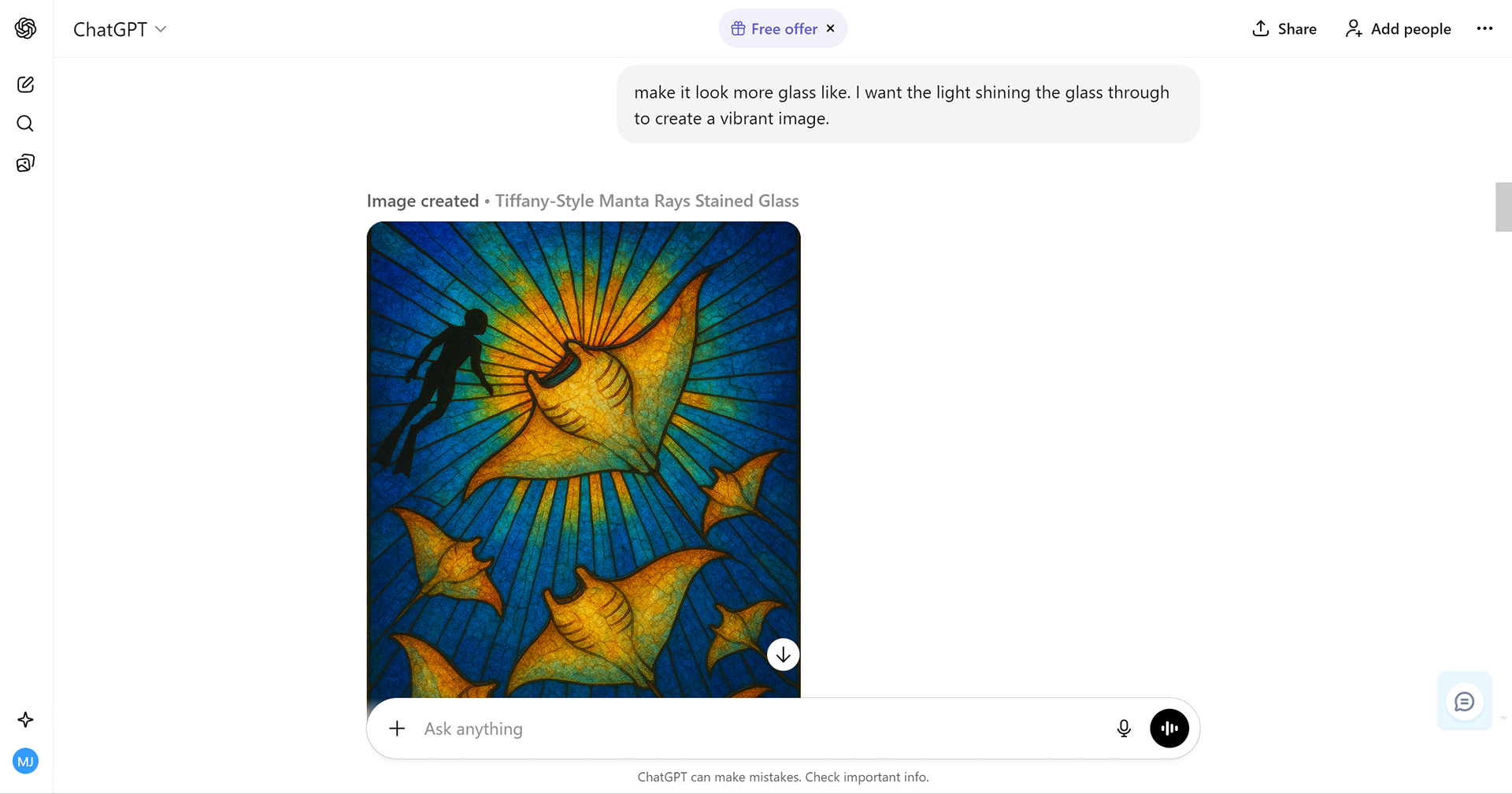
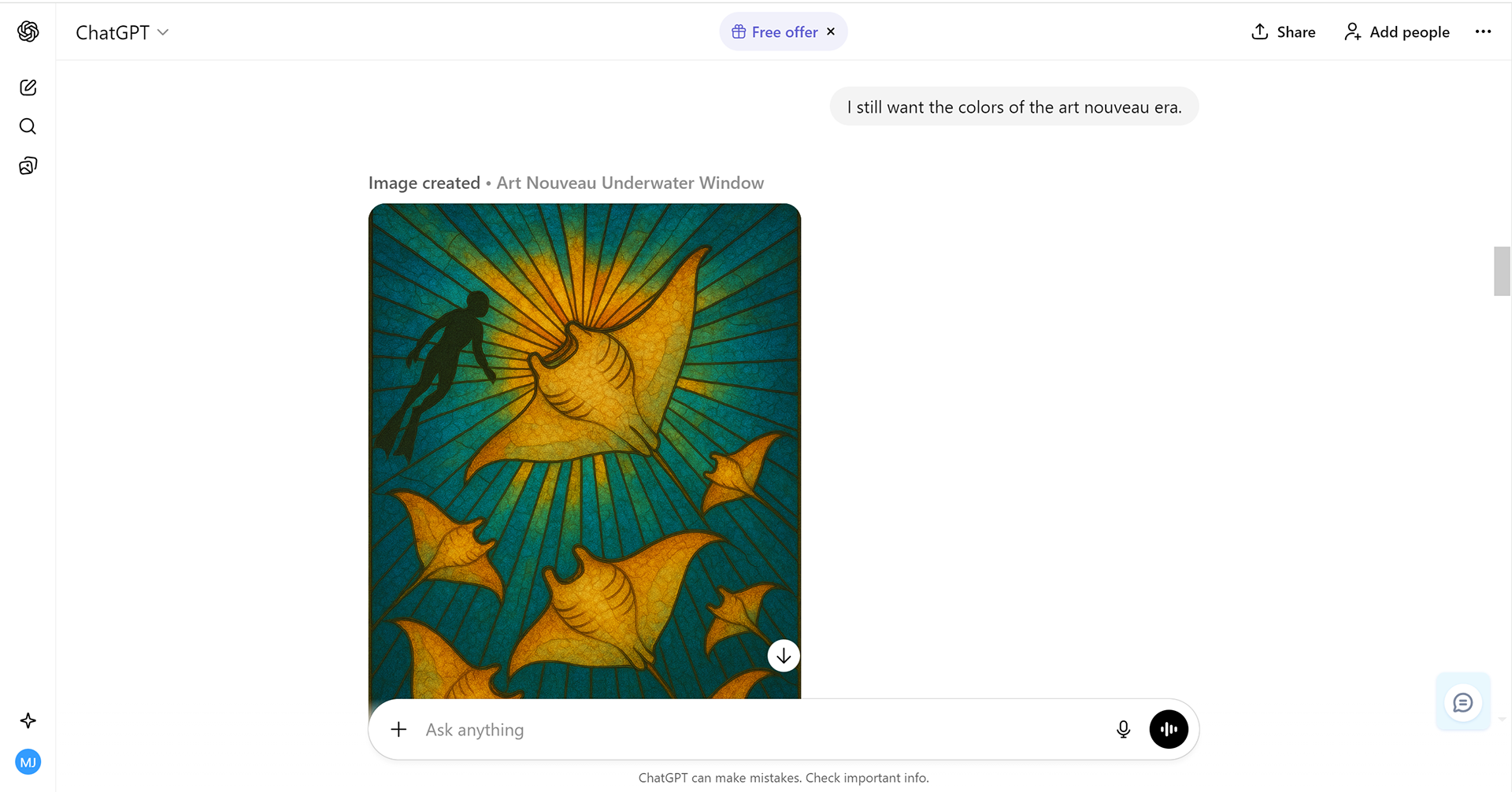
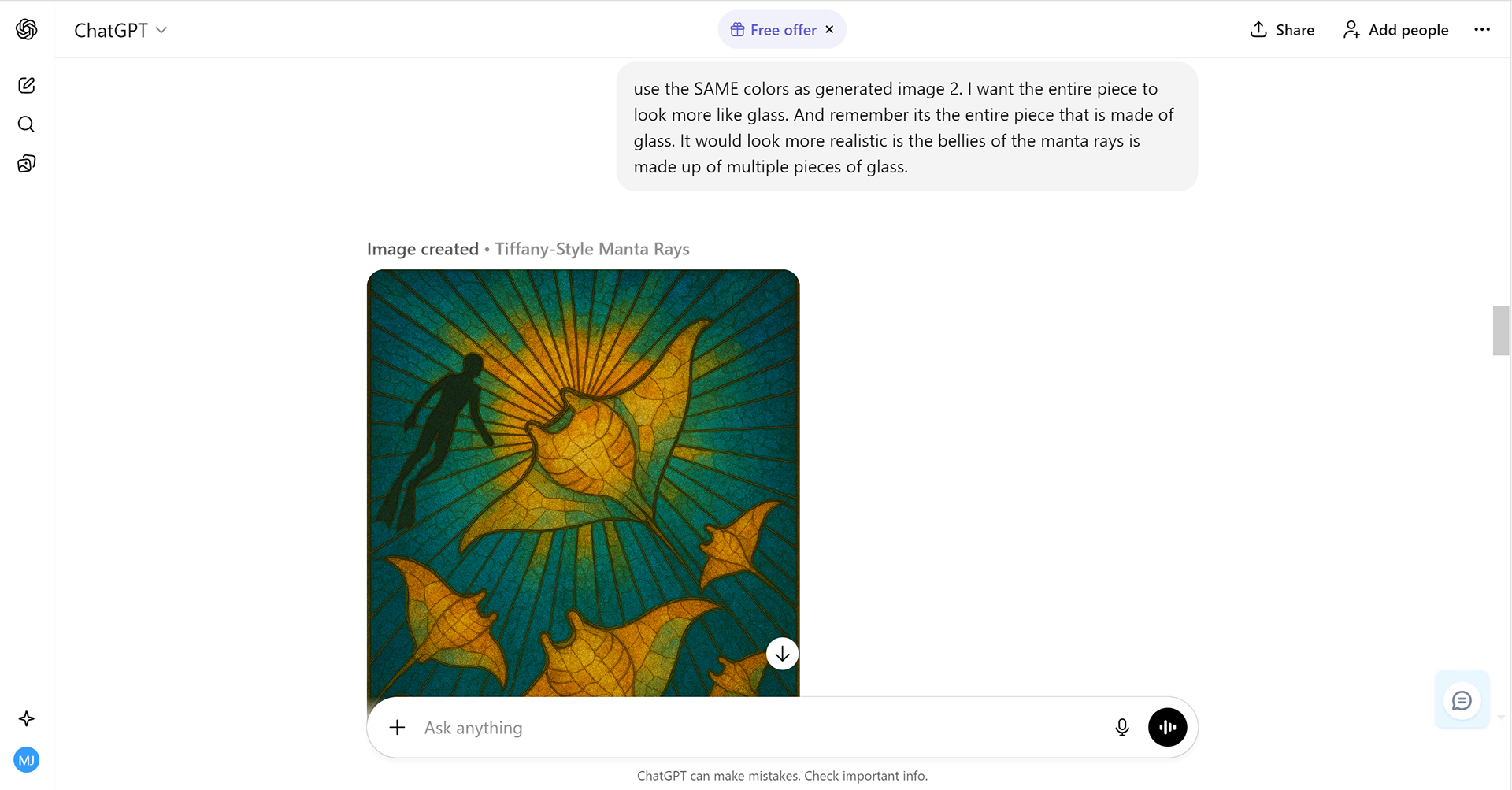
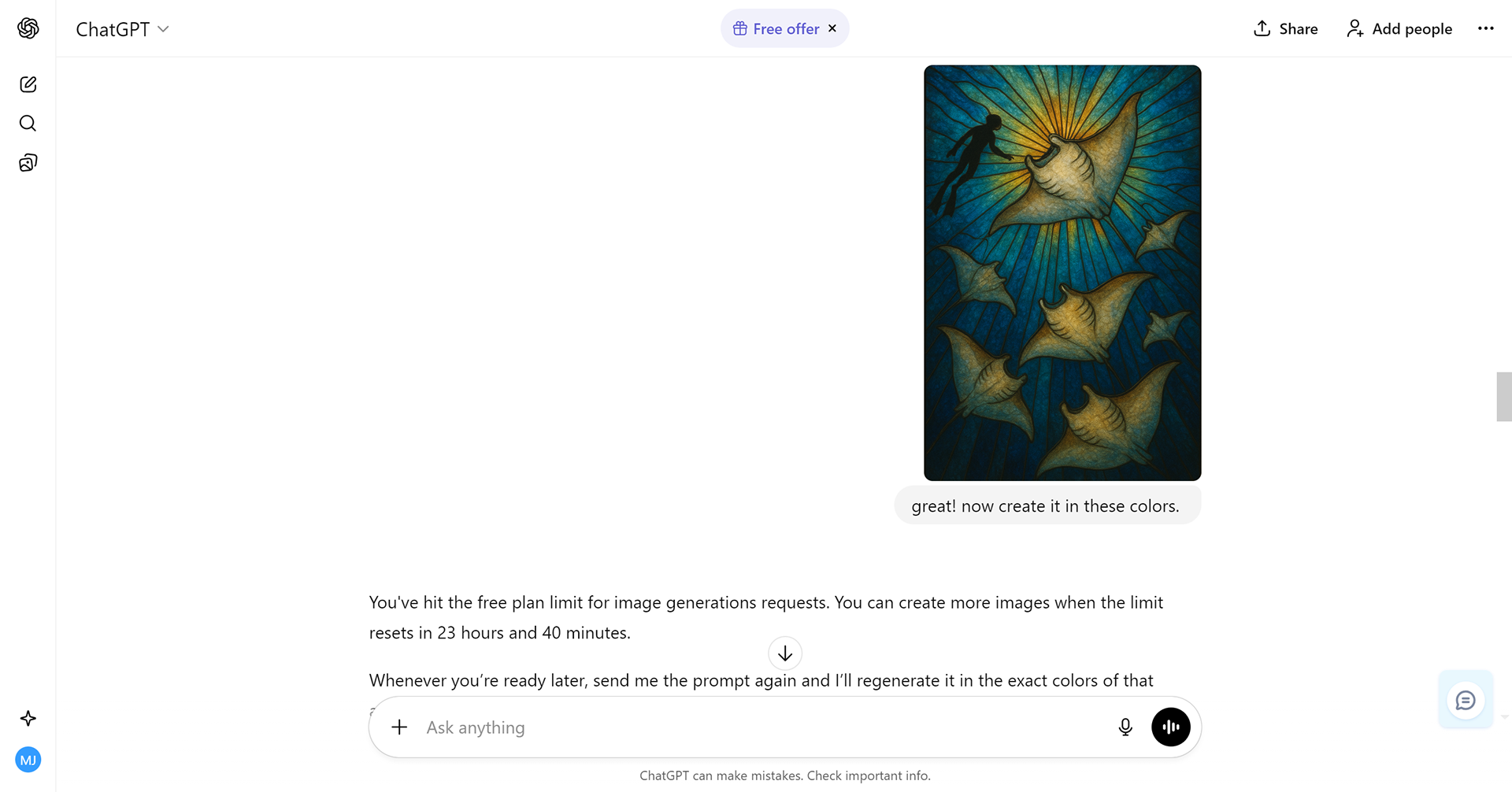
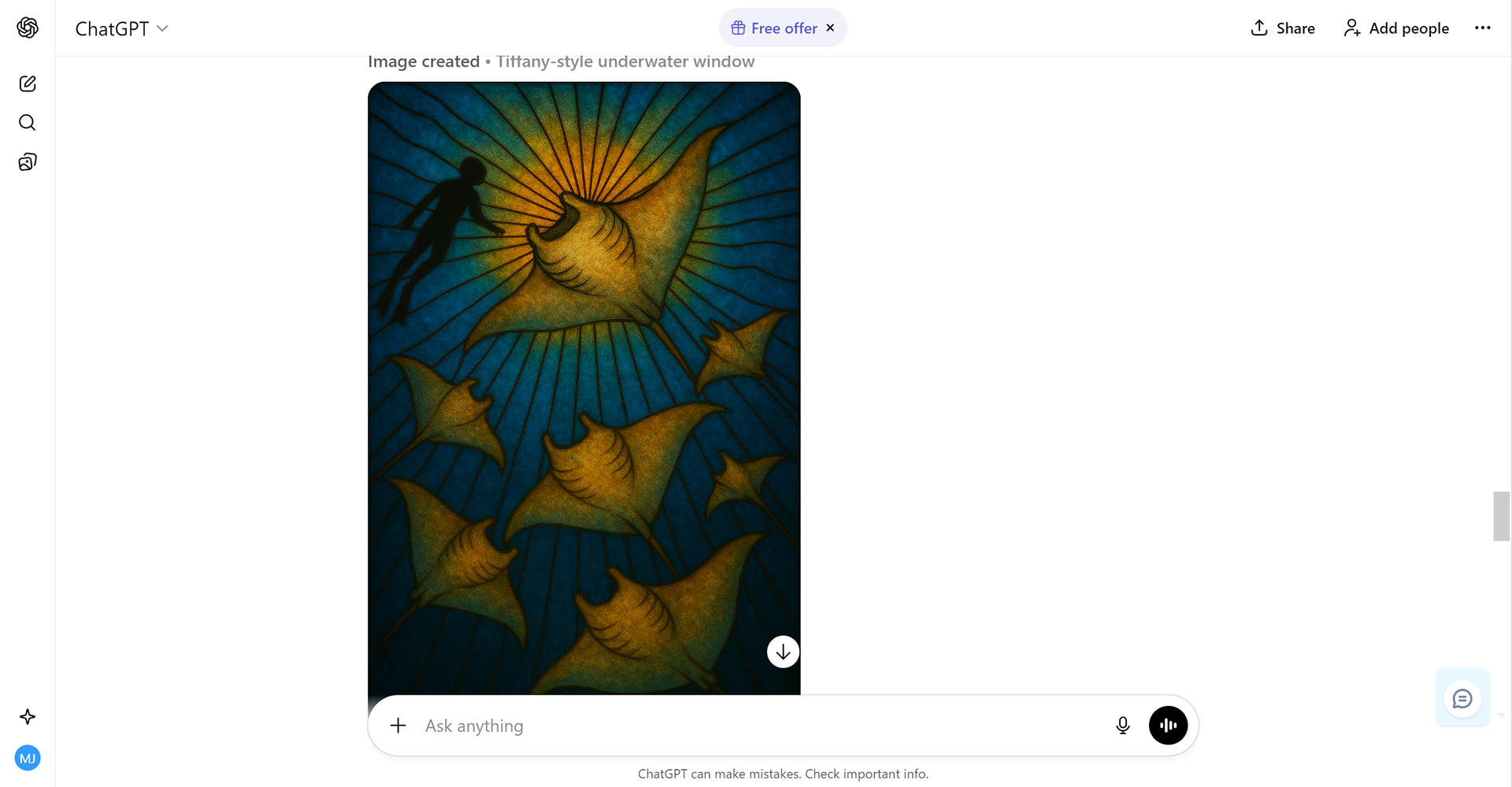
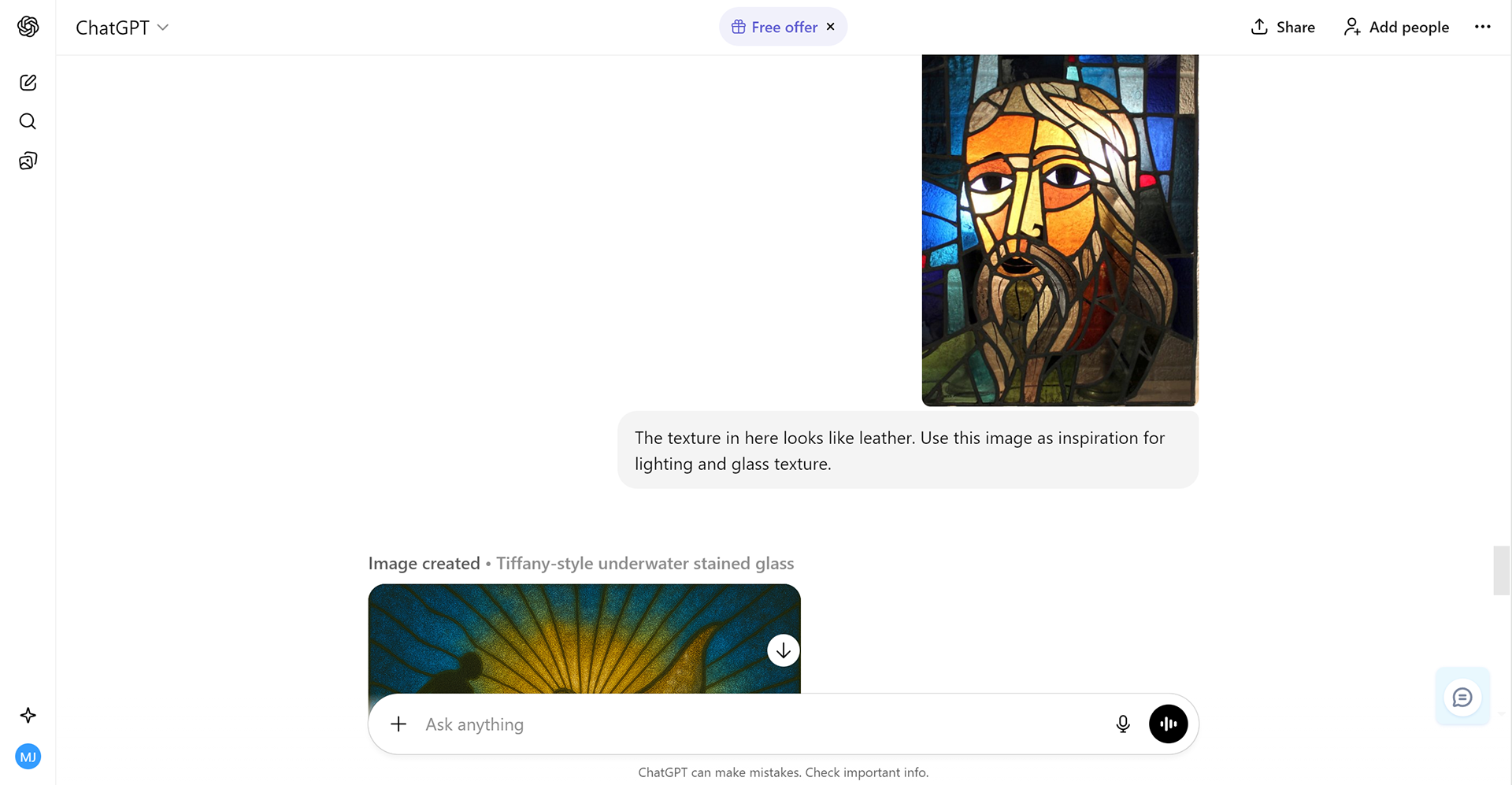
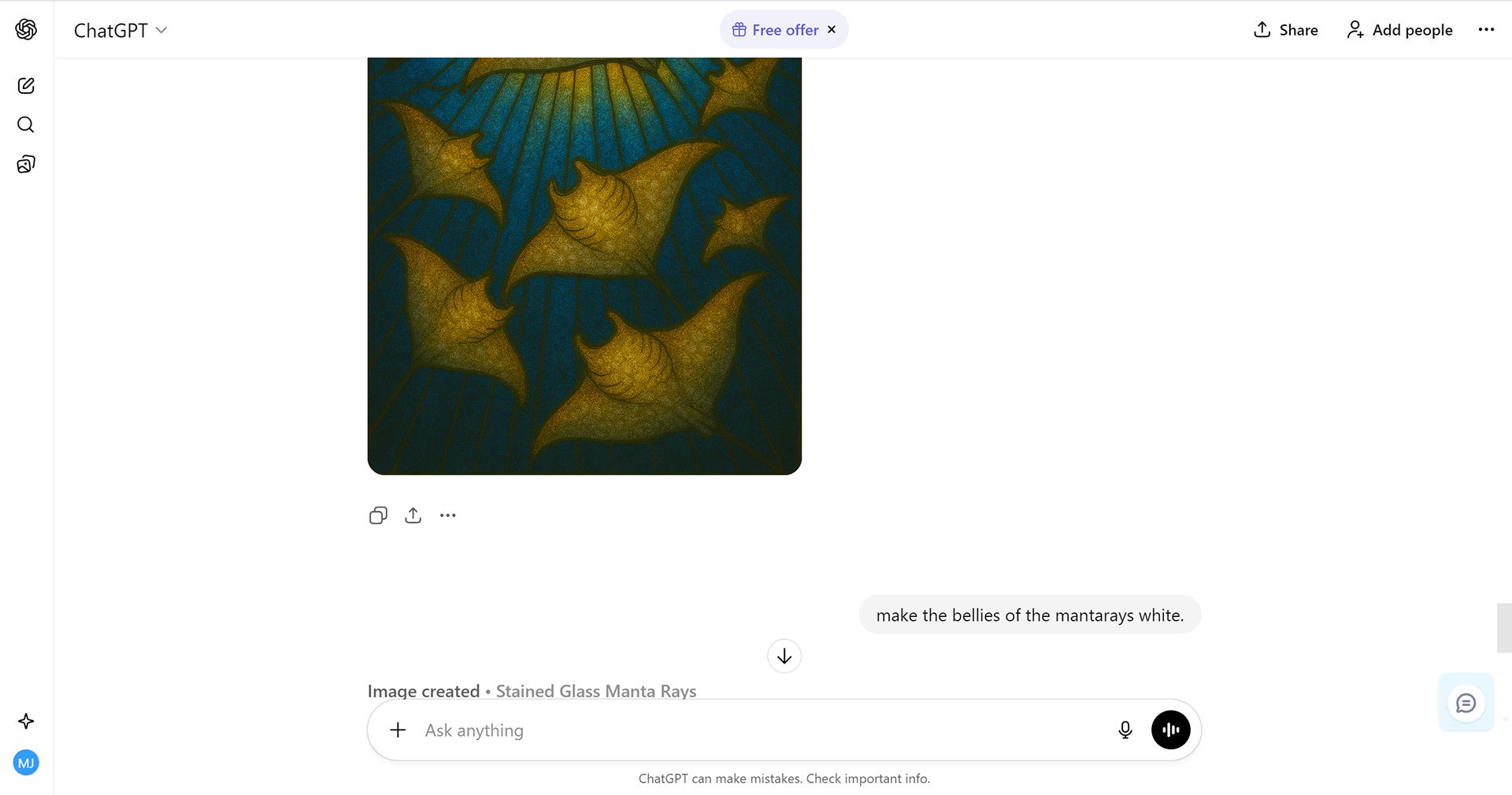
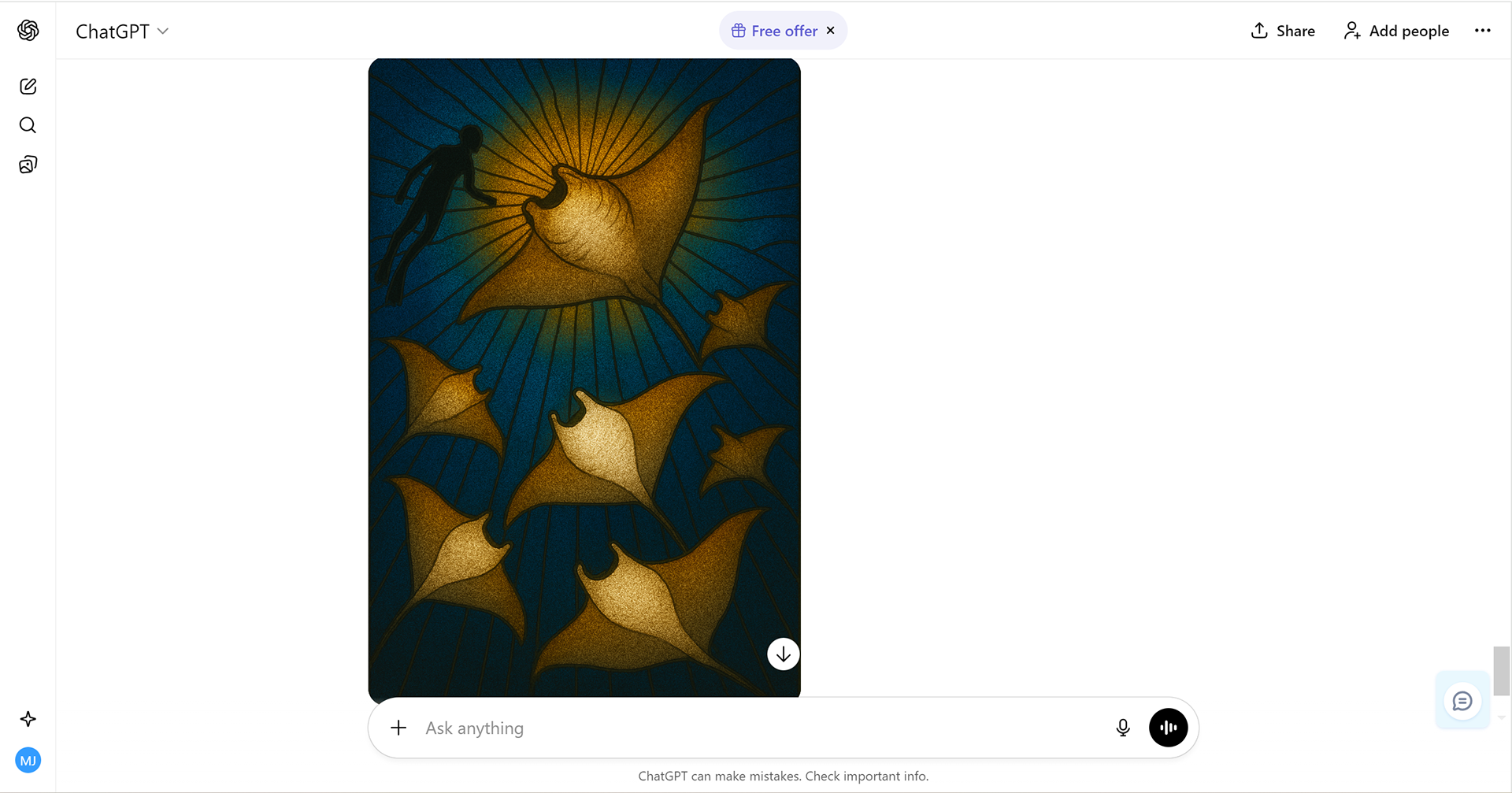
Chat GPT was struggling to understand that I wanted glass texture in the colors are art nouveau stain glass. I tried to see it through and see if Chat would understand what I was saying, but eventually I was getting results with really obnoxious colors and textures that resembled leather and a glitter painting.
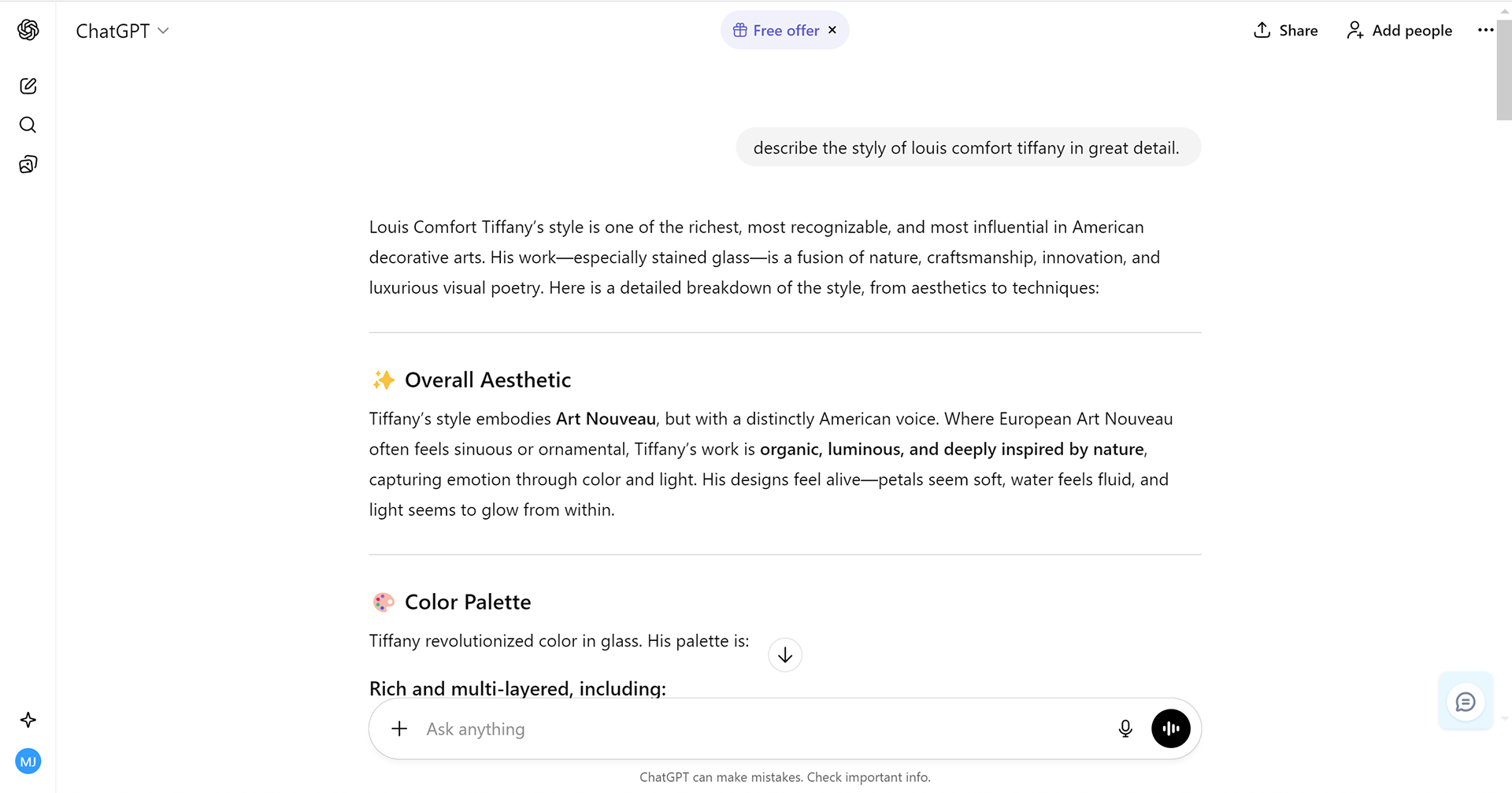
At this point, I realized that chat would understand it own wording, so I used that to my advantage. I asked chat to explain Louis Comfort Tiffany’s style in detail, and that was copied and pasted in my next prompt.
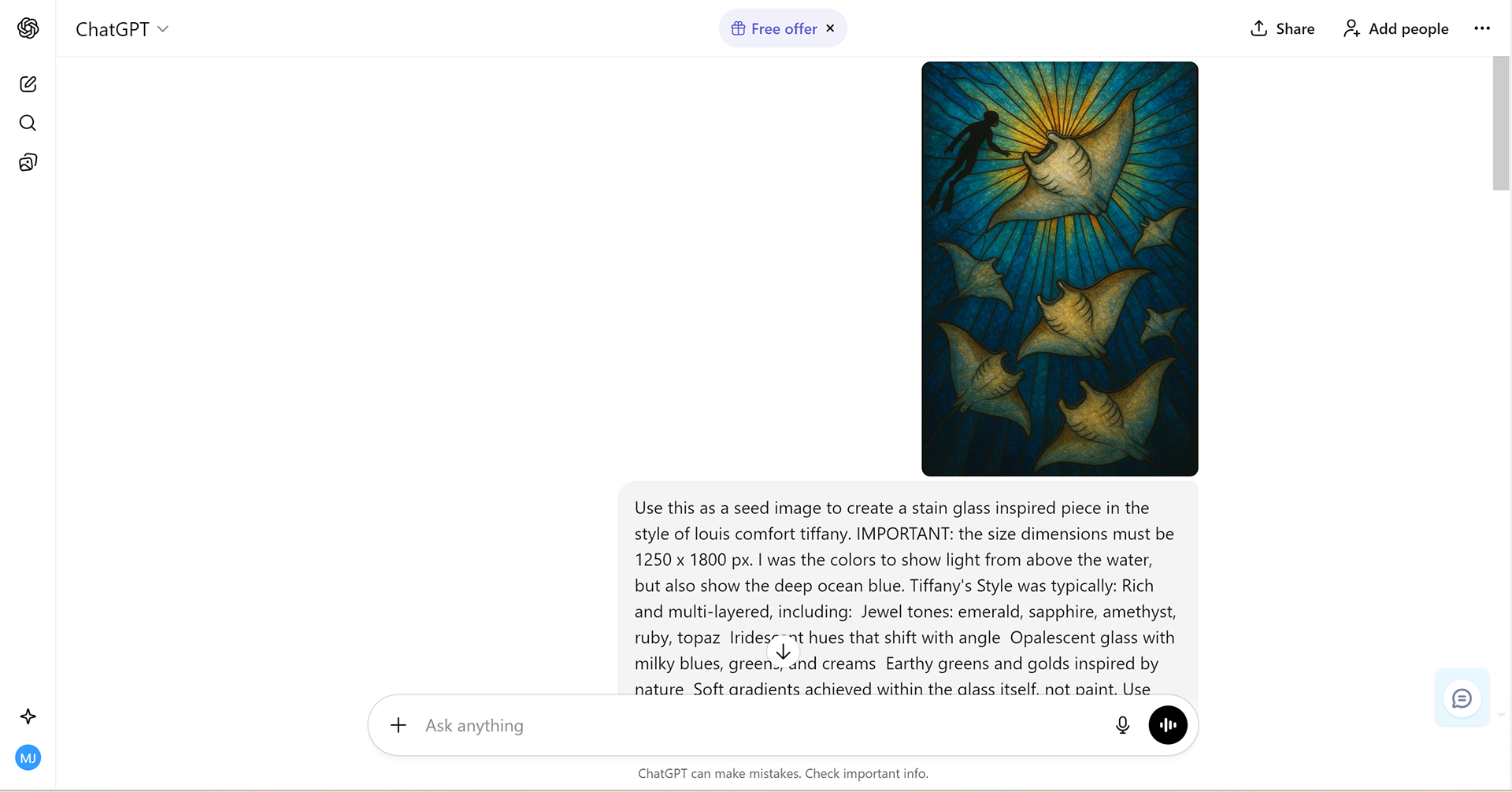
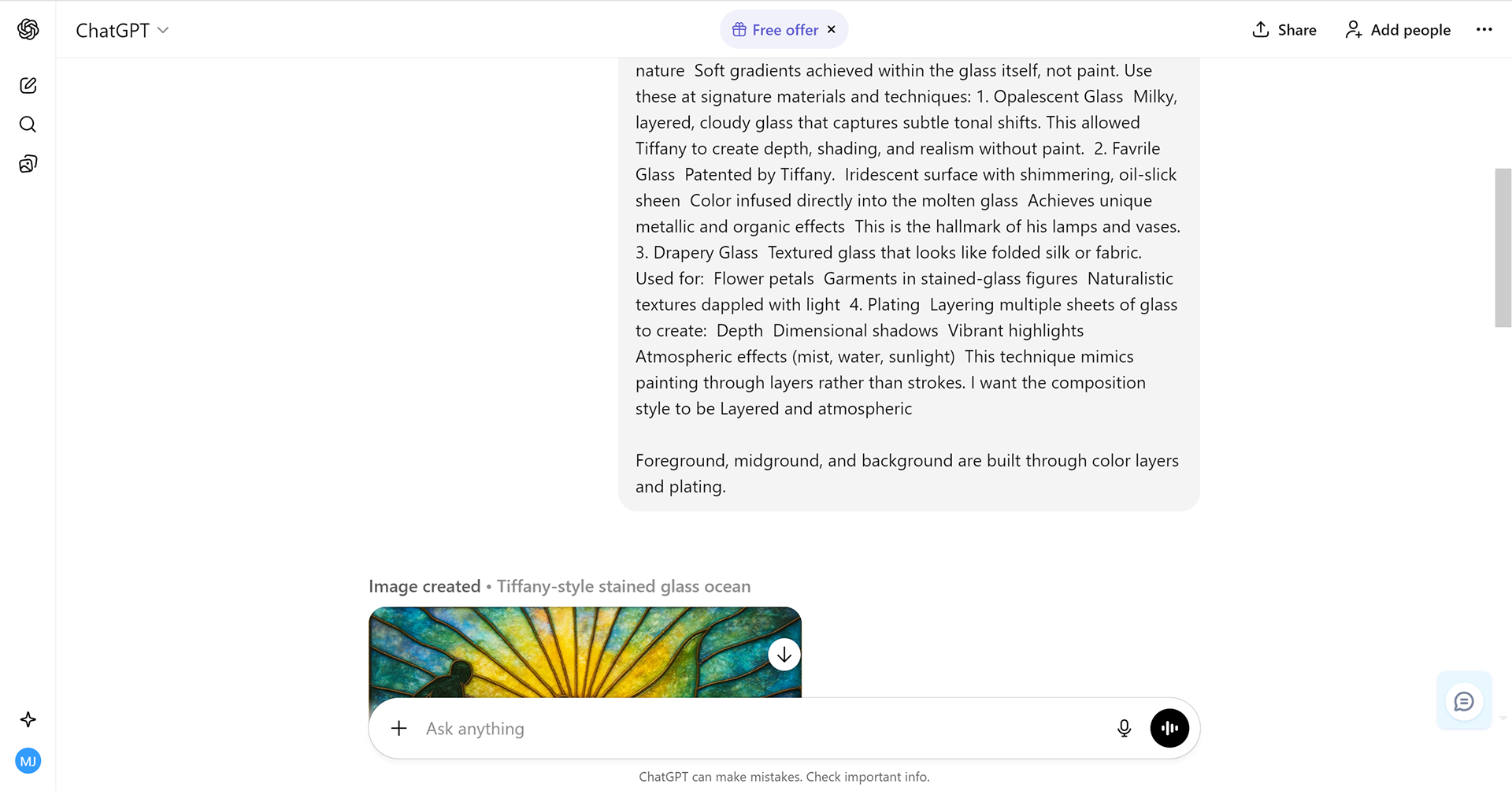
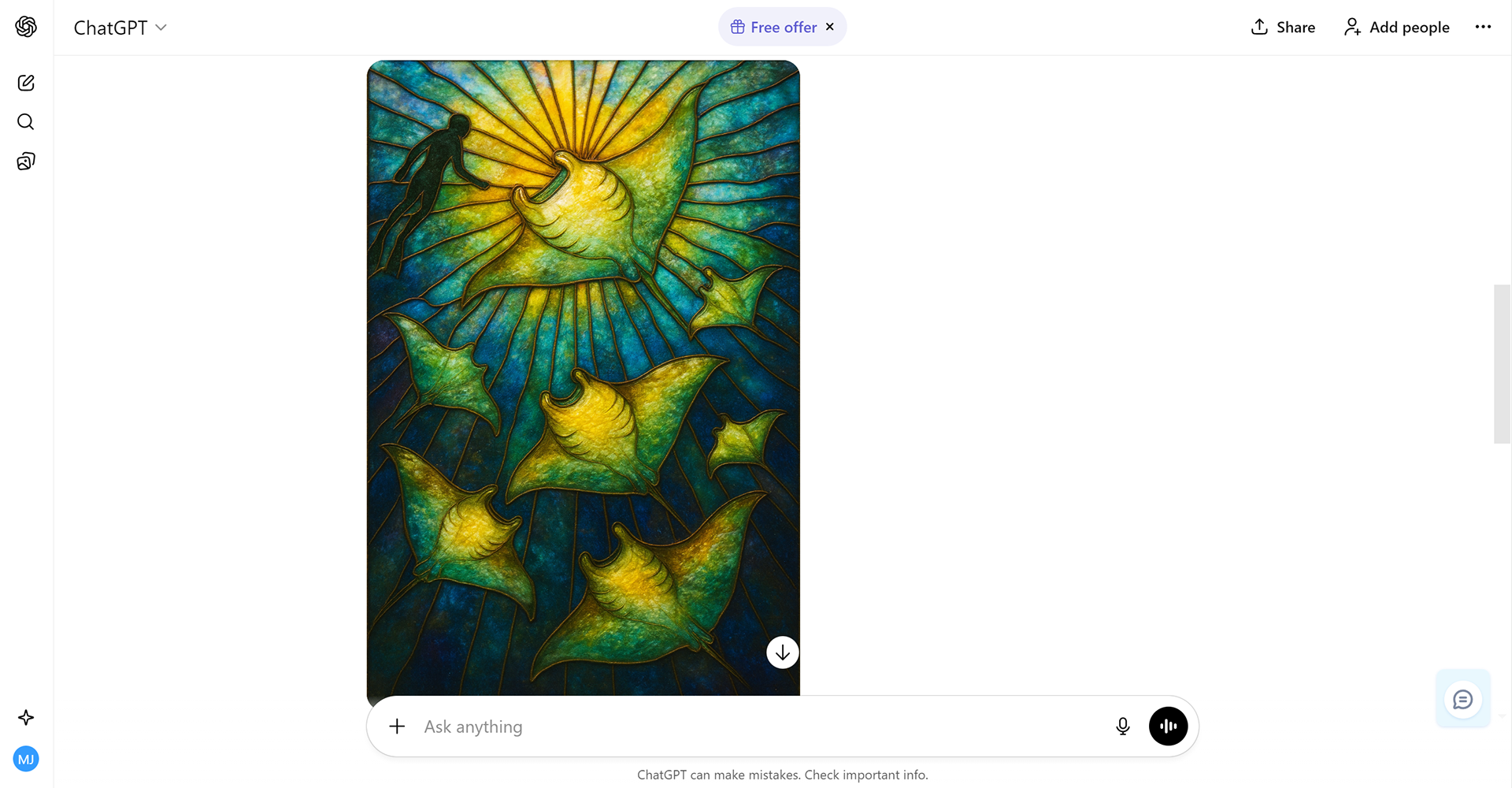
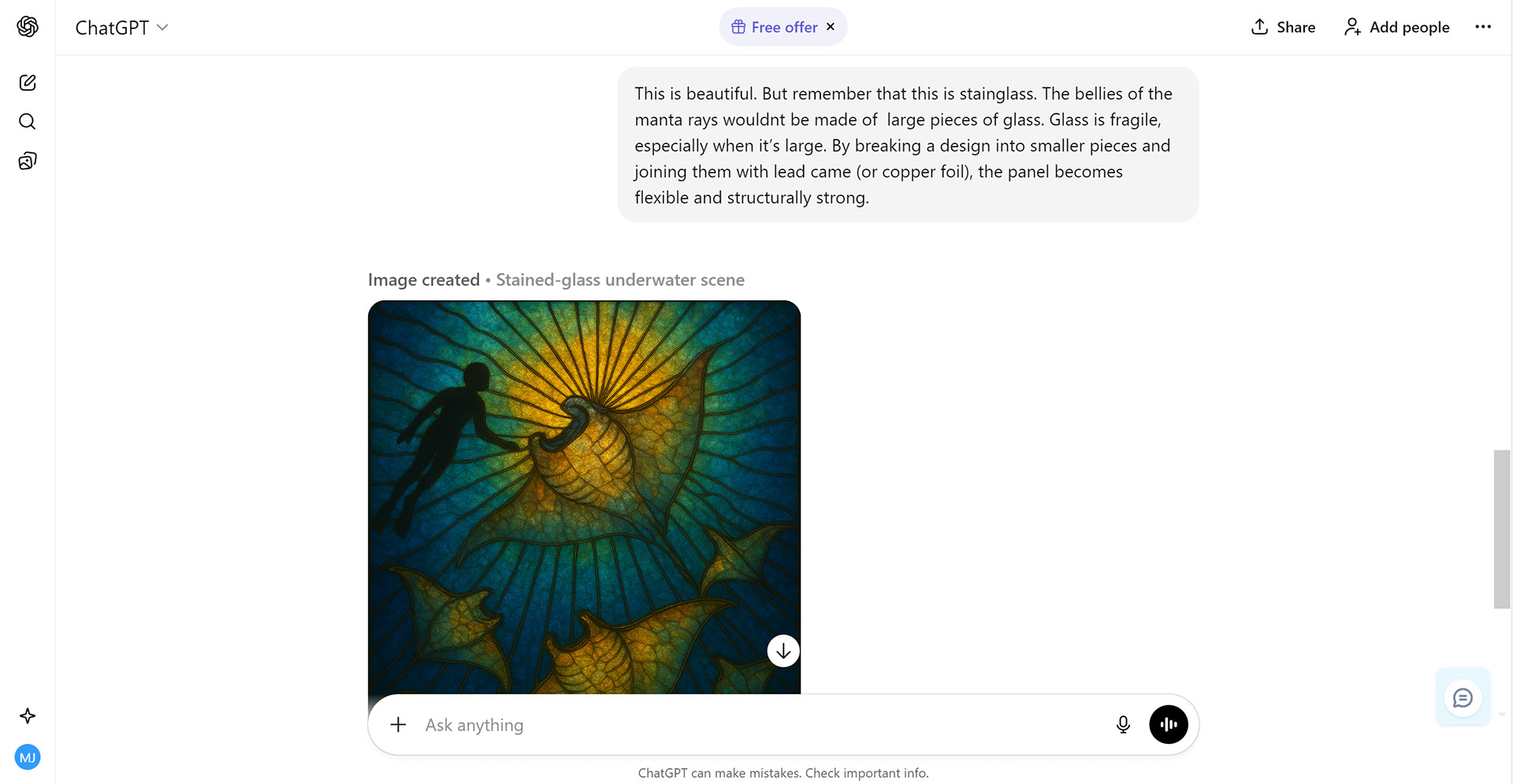
I finally felt like I had a successful run with something that looked like Louis's style but also had great glass texture. I tried having the glass made of smaller pieces, but the image went very dull again. It didn’t feel like glass. I took the previous image and used that as a seed image in my next prompt.
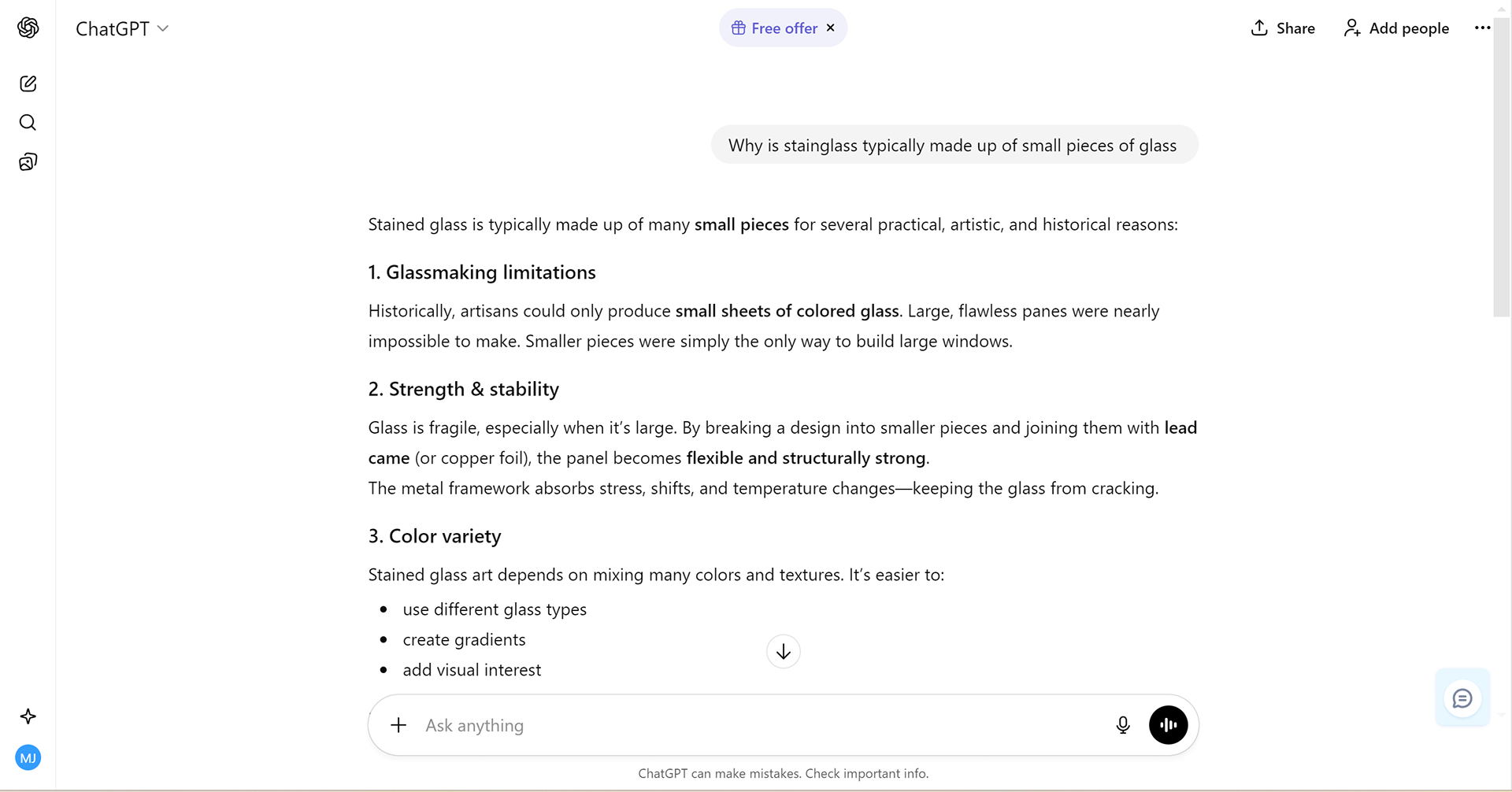
I used this same technique of using chat gpt's wording to my advantage. I wanted chat to explain why stain glass is made up of small pieces.
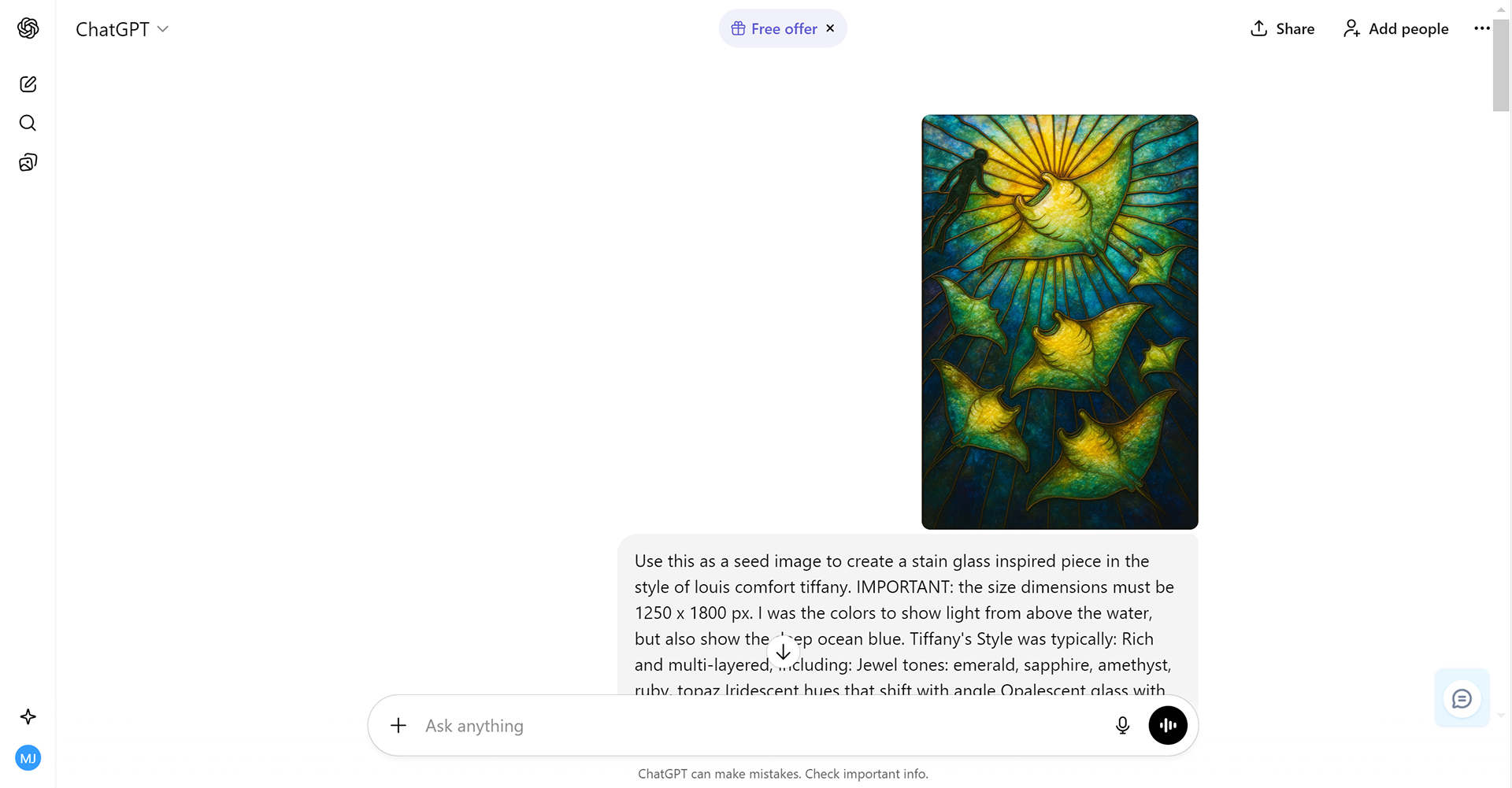
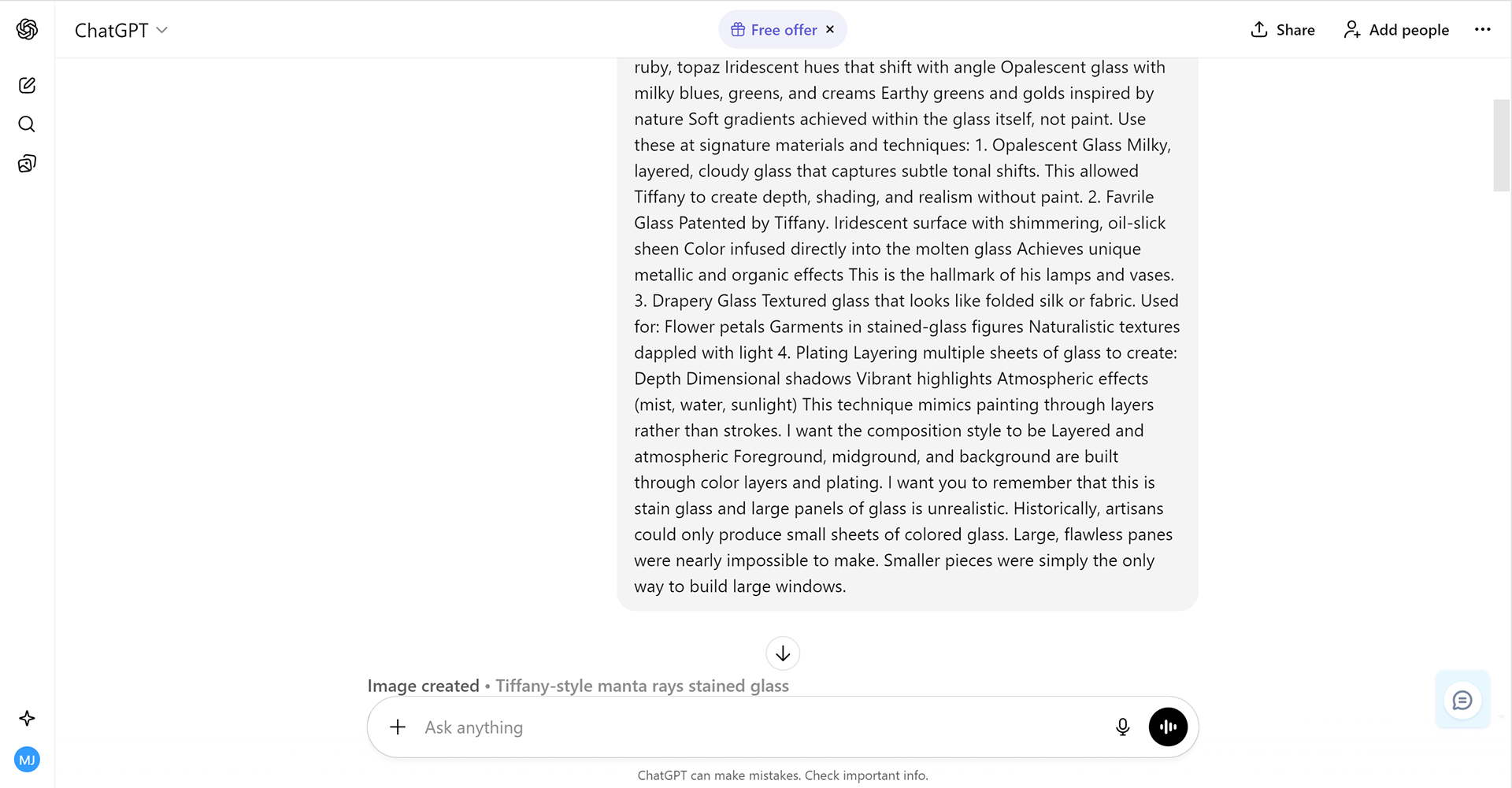
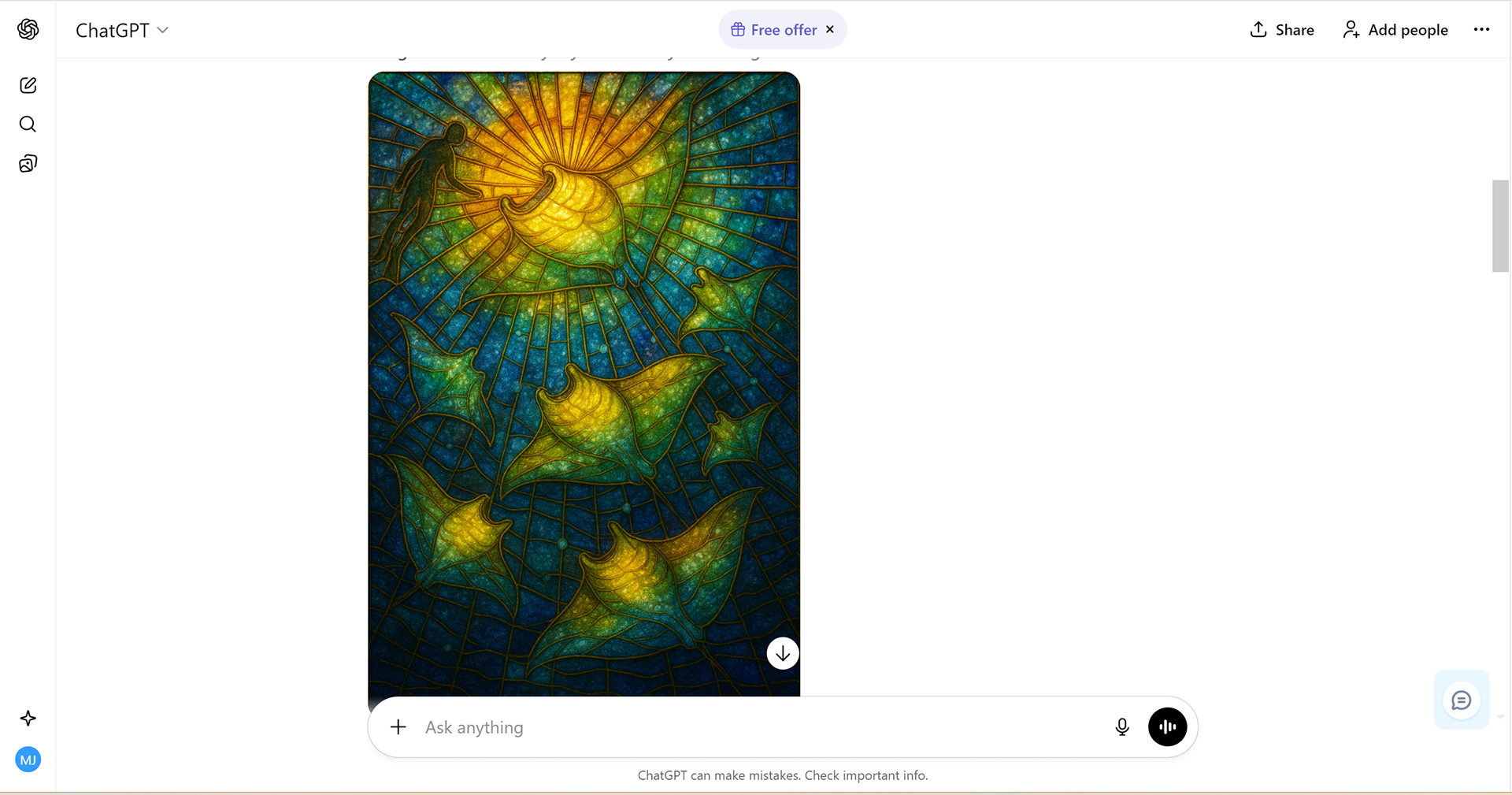
In this prompt, I used a previously generated image with the same prompt that got me to this image but made sure to add why glass is made up of small pieces. I finally came up with a piece that I was happy with and wanted to start the manual intervention.
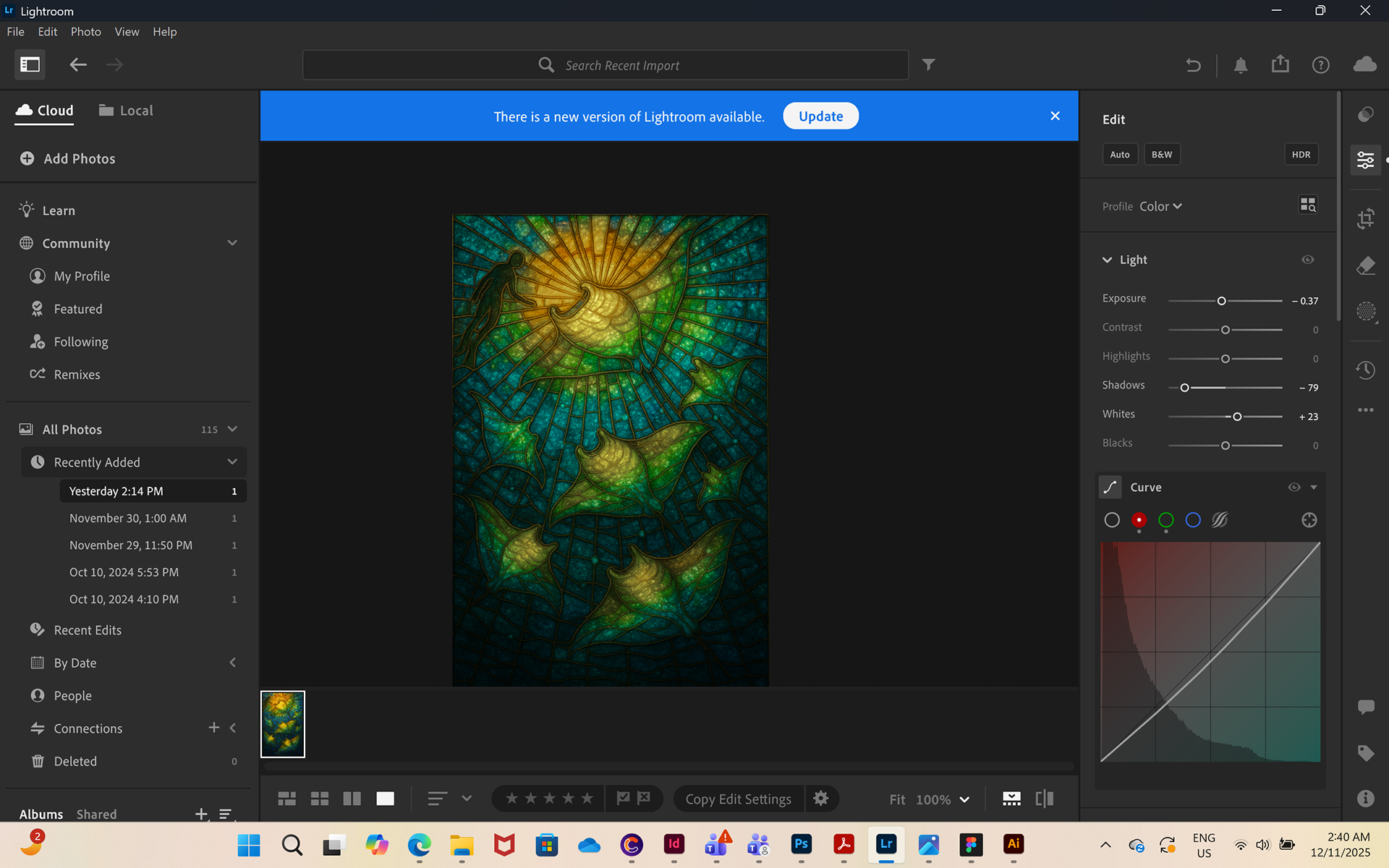
I took the generated image into Adobe Lightroom and adjusted the lighting to fit the time period better. I also adjusted the exposure and whites to make the image brighter but also added more shadows to help show the depth in the composition and the ocean. I also took it into Adobe Photoshop to adjust the dimensions. While chat did a fairly good job, there was still some changes that needed to be made.
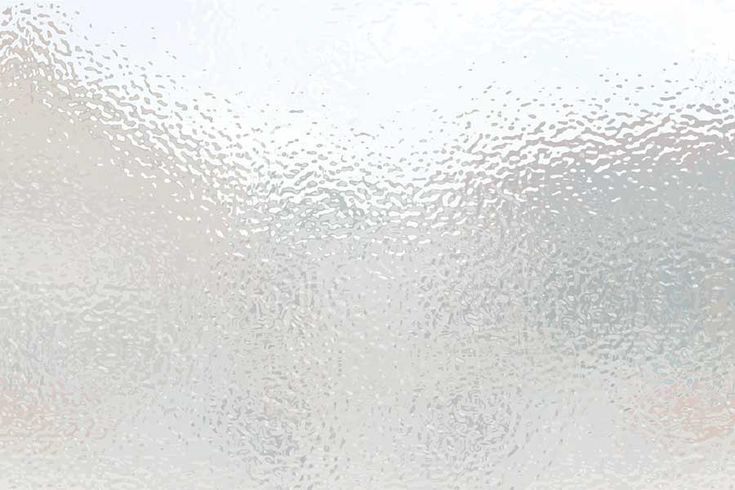
At this point, I went to find a mockup. I found a frame against a white wall in Adobe Stock. I also found a glass texture that was applied to my final composition.
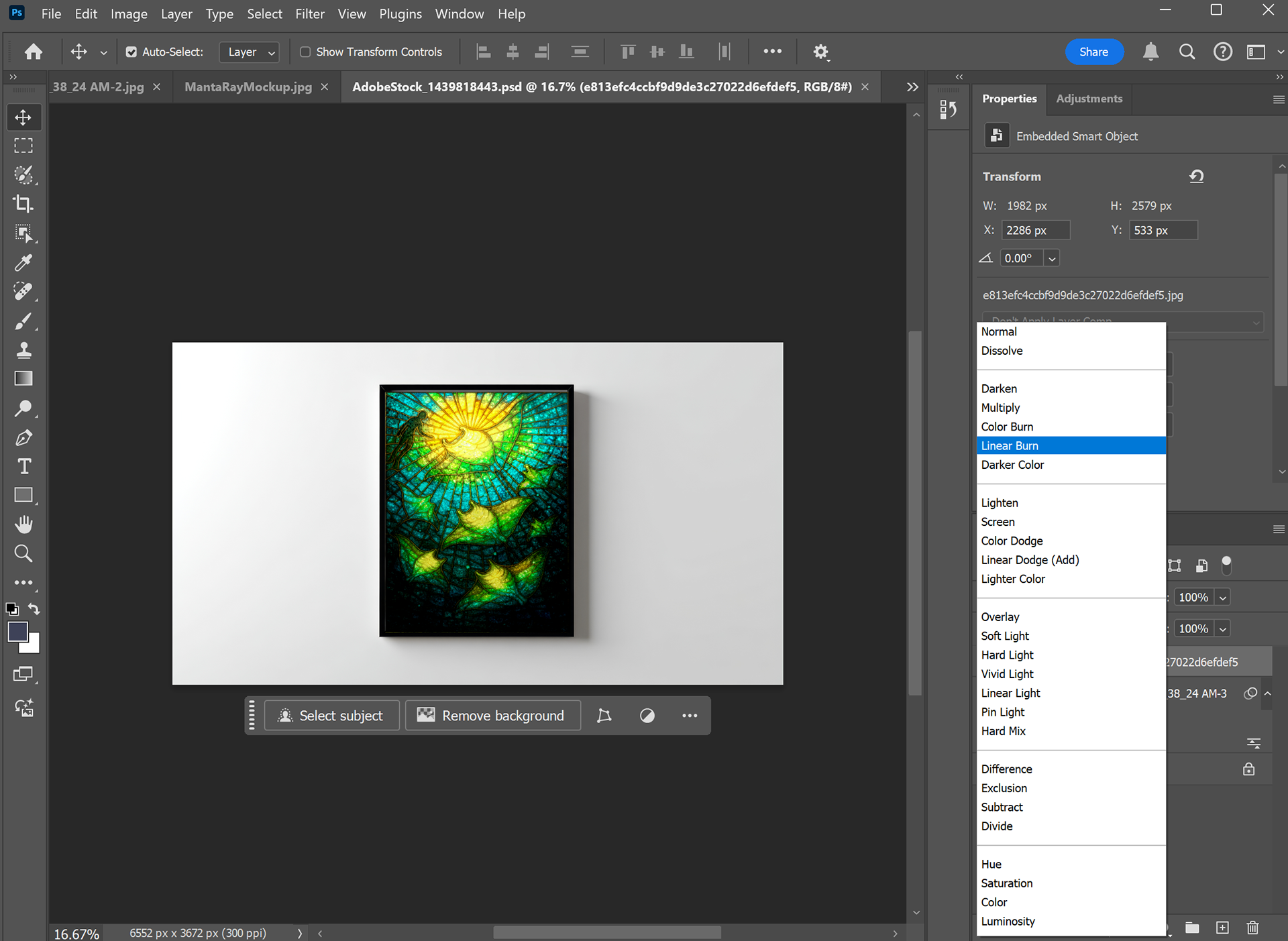
I used Adobe Photoshop to add the image into the frame. After that, I increased the exposure to try to show light shining through the image. The glass texture was also applied on top with a linear burn overlay.
first generated image vs final result